Episode #
92
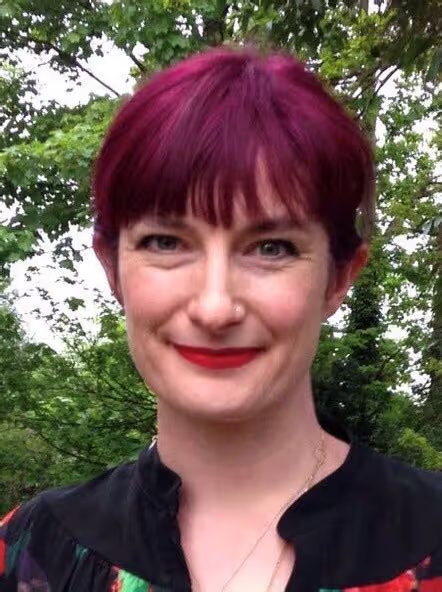
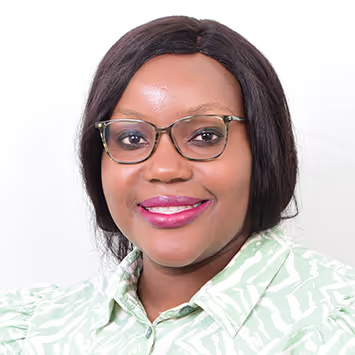
Prudence Muchinouta
Episode Summary
Q1: Place
If we could do a flypast on any part of the world that is significant to you, which place, city or country would it be and why?
Karongi in Rwanda
Q2: Life
Give us a glimpse into your life story so far with an emphasis on what you are doing currently?
I grew up in a small mining town in Zimbabwe with the mining business providing opportunities to attend good schools and recreational opportunities. Parents initially could not afford for me to attend University so I became a teacher in a rural area where there was no energy or water or good transport links. It was shocking also to see that there was little motivation or vision for the young girls which was the foundations to the work I am doing today with Comaco. Empowering young girls, supporting women entrepreneurs and responding to the challenges of climate change.
Q3: Reset
Where on earth is your place or reset or re-charge?
I love hiking because I find that it allows me to block everything else out.
Q4: Wonder
What wonder of the natural world excites you the most?
Table Mountain in Cape Town
Q5: Hopefulness
What is your story of hopefulness (not your own) about a person, business or non-profit who are doing amazing things for the world?
Farm Africa is my story of hopefulness. "Effective agriculture has the power to change lives. It underpins prosperity, food security and stability the world over". Like Comaco they believe in the need to revitalise African agriculture, to break the mould which has often inhibited development and to find new, more effective strategies
Q6: Insight
As we prepare to re-enter, what insight, wisdom or question would you like to share with us?
To transform and resolve many of the global challenges that we're facing, simplicity is the answer.

Transcript
Intro:
Orbiting 250 miles above Earth, the space station provides the ultimate view of planet Earth. From this perspective, we ask our guests to engage with six questions that orbit around wonder and stories of hopefulness. For the next few minutes, this is our Wonder Space.
Steve:
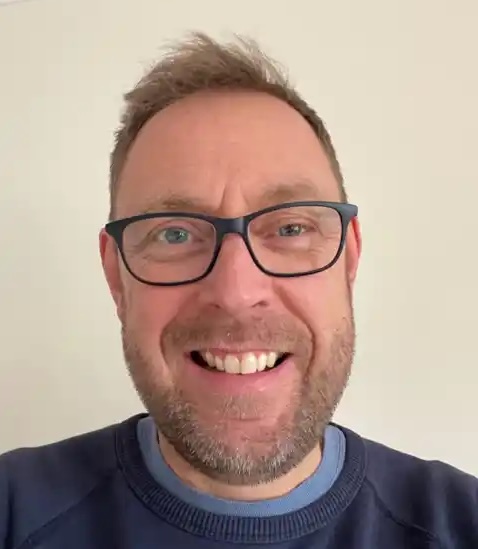
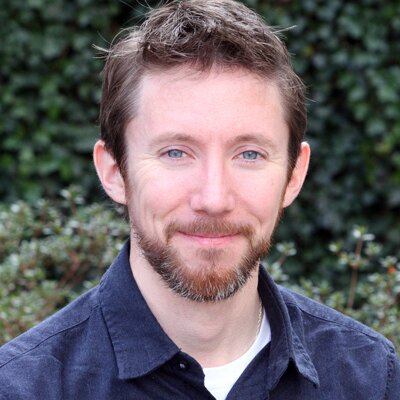
Welcome to the ninety second episode of the WonderSpace podcast, which is a creative expression of a family trust called Panapa. My name is Steve Cole. And since September 2020, I have asked the same six questions to over 90 people from around the world. People like Sara Hyde, who in episode nine, powerfully talked about her roles in prison reform and local and national politics. Sara quoted Bonhoeffer, who said, Rather than bandaging the wounds of victims beneath the wheels of injustice, we should drive a spoke into the wheel itself.
Steve:
For our third year, we are excited once again to be collaborating with Ask Nature, who are a project of the Biomimicry Institute. Their work looks to nature for inspiration to solve design problems in a regenerative way. Here is another moment to help us re wonder.
Ask Nature:
Above the surface, jack pine trees of Northern North America seem to be independent individuals. But beneath the surface of the thin sandy soil, one jack pine's roots may run into the roots of another. When they do, they may press into each other and add cells along the pressure points until they break through the bark between them. Then the inner tissues from the two plants contact each other directly and the cells start to stick and grow together. Once such a graft forms, the trees essentially have one combined root structure and can share resources through the connected roots often among multiple individuals.
Ask Nature:
The shared roots allow trees growing in more favorable conditions within the stand to give weaker disadvantage to trees a boost. They provide added stability against strong winds by weaving a whole stand of trees together. And they crowd out competing species by helping old stumps to stay alive and sprout new life nearly indefinitely.
Steve:
This week on WonderSpace, we welcome Prudence Mucinuta, who serves as a Chief Financial Officer for a social enterprise called Kamako, that provides alternative solutions to enhance and improve the livelihoods of rural communities in Zambia. Prudence is passionate about empowering young girls, supporting women business entrepreneurs, and creating solutions in response to climate change. She was nominated by Tamsin Jones, who is the head of Mastery of Business and Empathy at the Small Giants Academy in Melbourne, Australia. With this expansive overview of Earth, I start by asking prudence. If we could do a fly past on any part of the world that is significant to you, which place, city, or country would it be, and why?
Prudence:
There's a specific area in Rwanda, and the place is Karongi. I think they call it Karongi destination or town. And I visited this place a few areas, I actually traveled to Rwanda just a couple of years, a year or two after my dad passed on. And you know, was talking about how amazing Rwanda was and you get to interact with nature. And what I wanted was to sort of discover more of myself.
Prudence:
I felt so lost but I visited this place and the tour guide took me to Karongi and it was a fusion of everything I told him. He asked me what I wanted to do and I told him I want to hike, I just want to be in my own space And I want to see some of the livestock you have. So, we went to these mountains, we experienced waterfalls, I got to feed monkeys. You know, it would be so strange to think that in Africa you're excited about feeding monkeys because we always see them on the roadside, but it was a different experience and seeing bats flying everywhere, it gave me everything. So Karongi destination in Rwanda was the place I would fly past.
Steve:
Prudence, give us a glimpse into your life story so far with an emphasis on what you are doing currently.
Prudence:
The person that I am today is definitely something that resonates to my upbringing. So I grew up in a small mining town in Mutora Shanga in Zimbabwe and you know, the beauty about it, the time we're growing up is the mines actually lived up to their commitments of CSR. So it was a small town detached from the fast paced life and I was in boarding school because they were just basic schools, but the mines provided everything recreation, sports. We had good food, good road network, good hospitals, and these are things that really made matter in these remote areas in Africa. First track, I went to high school and I went to good schools, I was in leadership positions from the time I was in primary head girl, high school, vice head girl, sports captain, everything seemed, you know, aligned and my parents couldn't find money to send me to a private university.
Prudence:
And at this time, the public universities in Zimbabwe were going through so many restructures and students were protesting, going on strikes, same as the teachers. So, it wasn't ideal to go to a government institution. And the only options were to go to a private university, which my parents couldn't afford. All my friends were talking about going to South Africa, to Australia, to The UK, and I couldn't even go to a university in Zimbabwe. So, my life definitely changed.
Prudence:
I got to become a temporary teacher, that's what they call them. This is like you taking on teaching without a qualification except for your high school certificate. But the most interesting part was this was in a rural area. So, no buses, I had to walk 30 kilometers. There was no electricity.
Prudence:
I had to learn how to cook on fire. No water, you needed to walk distance to fetch some water. But as a teacher, I could get the students to help me out with that. But my life totally changed. This was me coming from wearing my rebound blazer representing the school on various stages.
Prudence:
And here I am in this remote area and I felt like my parents didn't love me anymore. The world didn't love me anymore. I had so many thoughts about life and I still had my friends that had moved to university and were still in touch. I couldn't come back to town because that meant I needed to be walking 30 kilometers every now and then. And fast track again, things changed, shifted, eventually my parents hustled above their salaries.
Prudence:
I managed to go to a university, private university which is Solucy University in Blueo. Now why this is relevant to what I'm doing today, I am passionate about empowering the girl child, but not just about the girl child but the rural communities. When I was in these areas, I mean, had vegetables, we had meat, we had good food, which came from the communities, but they did not have good road network. There was no value add to what they were producing. There was no vision of future for the students that were at this school.
Prudence:
It's like they're just going to school to attain a certificate and that's the end of it. Wait to get married to the next heads man or the most decorated teacher in those areas. And that was it. You know, you can't dream past that. And today in my work, I keep asking myself, what can we do to move these people from this position of content, which takes them nowhere, if I can call it that.
Prudence:
Why can't we empower? Why can't we bring electricity to these areas? We speak of rural electrification projects, but it's like we're so content in keeping these communities in the state they are. There is more to that. I could have gotten married maybe to the chief become the fifth wife to the chief, but I had to believe in myself and to dream bigger because I had seen better.
Prudence:
I decided to take up a finance profession because at that time I thought, well, if I became a chartered accountant, I'll have so much money and then I would change the world. It's not like that. I had to do more than that. I had to look beyond my profession. I had to care and figure out the things that matter.
Prudence:
And this is why I'm so driven today to see rural communities receive the attention, finance and support that can actually transform them and change many of the children's lives.
Steve:
Where on earth is your place of reset or recharge?
Prudence:
My place of recharge, I love nature. I think I get that from my dad. When things get tough, I just pack up everything, my camping tent, my mattress, my chair and I drive to mostly Lower Zambezi in Zambia, but there are quite a number of camping options And I love camping because I get to again, like I mentioned earlier, interact with nature but it's so peaceful, it's quiet, I don't have to worry about what food, where I'm gonna buy, what am I going to eat because you can just get to fish and have food from the communities around. So yeah, I get to hike. I love hiking a lot because I find that it exhausts me and allows me to block everything else and just focus in the moment.
Prudence:
So, yeah, all the time thinking about resetting or trying to find some new energy, find the nearest campsite. What wonder of the natural world excites you the most? Well, as a lover of mountains, and I haven't traveled much, so that one is an easy one for me. I will think of Table Mountain in Cape Town, South Africa, and I just love being up there. But it was also something that challenged me to get over my fear for heights.
Prudence:
It also is connected to, you know, many of the communities and you get to experience the traditional of these local communities. These opportunities for sporting activities. I love sport. And then also what's so important, the spiritual solace you find in these highland landscapes. That's something that's amazing and that's what Table Mountain will give you.
Steve:
Prudence, what is your story of hopefulness that's not your own, about a person, business or nonprofit who are doing amazing things for the world?
Prudence:
It would have been easier for me to mention Komako, which is the organization I work for, because I believe that Komako is doing amazing things, And I love everything that we stand for. But the past two, three months, I've been reading about and following the story and model of an institution called Pharm Africa. And Pharm Africa based in East And West Africa. And I loved their story and their model because I think we are quite similar in so many ways, though operating in different regions. Comaco is only just in Zambia, which is Southern Africa.
Prudence:
But there are so many similarities and the fact that we are all working to support and improve the livelihoods of small holder farmers and at the same time protecting the environment, the problems that these farmers face are all too familiar. It's the lack of training, technology, inadequate inputs, no finance, and the vulnerability to climate change and poor links to markets. And I believe Comako is trying to serve the same. But I think Farm Africa have taken a notch up than we have done. I hope my boss doesn't get to hear this.
Prudence:
And they actually said effective agriculture has the power to change lives. It underpins prosperity, food security and stability the world over. And it's as simple as that. Now Farm Africa was founded in 1985 by a Doctor. Sir Michael Wood and his counterpart, David Campbell, and he was an agriculturalist and specialist in African rural development.
Prudence:
And they established Farm Africa in response to the fair mine in Ethiopia. And one of the things that Sir Michael Wood said was that, I have concluded after a life's work as a surgeon in Africa that food is the best medicine. And he indicated that he now wanted to start an initiative to tackle the problem in new ways. Fast forwarding 2015, David Campbell commented about their vision stating that we both believed passionately in the need to revitalize African agriculture to break the mold which often inhibited development and to find new, more effective strategies. For me, these were people that were passionate about empowering the community but in demonstrating that they understood the African culture.
Prudence:
They've been in Ethiopia, they've been in Kenya and still identifying that there's a different way or different cultures that can work in you know, bringing development. And it's not just about, oh, let's extend finance or let's do this, let's have training nor the system is totally different. It's empowering, they're talking about value chains within the communities. And I'm seeing that the way Farm Africa has modeled its work is to ensure that the value chain process involves and engages the rural communities as well. And that's why I have been thinking, oh, this is the next great initiative and I love what they are doing.
Steve:
Finally, as we prepare to re enter the Earth's atmosphere, what insight, wisdom, or question would you like to leave with us?
Prudence:
I'm going to be doing a lot of quoting because I am finding my inspiration through different people and environments. So, like I mentioned in our discussion that I'm going through this creative leadership program. And I've been reading and watching enough videos about Arthur C. Clarke and how he, you know, envisioned the future. And he says, if what I say now seems to you to be very reasonable, then I will have failed completely.
Prudence:
Only if what I tell you appears absolutely unbelievable, have we any chance of visualizing the future as it really will happen? Now, what would this world be like if we opted for simplicity? And that's what I would like to leave the audience with. I know when we talk about simplicity, everybody's like you cannot in this digital era, but to transform and improve and change and resolve many of the global challenges that we are facing. Simplicity is the answer.
Steve:
You can find out more about the work of Kamako at itswild.org. In her story of hopefulness, Prudence talks about Farm Africa, and you can find out more at farmafrica.org. As you have just heard, it's so powerful when people talk about organizations that have nothing to do with themselves. So what is your story of hopefulness that's not your own? About a person, business, or nonprofit who are doing amazing things for the world?
Steve:
We would love you to consider recording yourself in under thirty seconds, sharing your story on your phone through your video or the voice memo or recorder app. You can then simply upload the recording to the link on our website, ourwonder.space, and we will look to include them in future episodes. Thanks to Prudence for joining us on Wonder Space this week. Let's continue to share wonder and stories of hopefulness that makes a name for someone else. We need them like never before.
Steve:
Thanks for listening.