Episode #
100
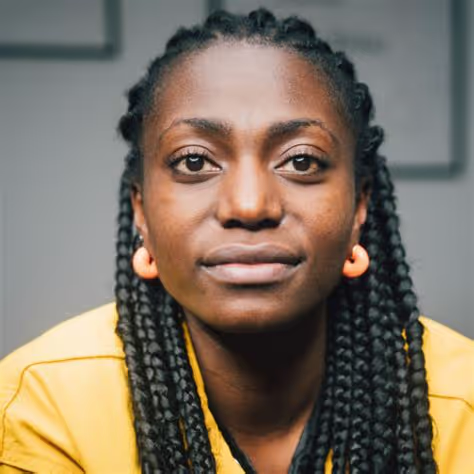
Christiana Bukalo
Episode Summary
Q1: Place
If we could do a flypast on any part of the world that is significant to you, which place, city or country would it be and why?
Another planet not impacted by human activity
Q2: Life
Give us a glimpse into your life story so far with an emphasis on what you are doing currently?
I grew up in Germany, and was born as a person who was stateless, a person who doesn't have a nationality. That was something that shaped my life, but I didn't really notice as a child, I noticed that things were different. At some point, when I grew up, the statelessness kind of caught up with me and that led to a situation in which I decided to focus more on the issue. I am now the founder of an organisation that is called Statefree and we work to empower stateless people by building community by creating visibility for the issue and also by realising the access to equal rights for them. In politics, we are currently very much focused on the German and European space and our goal is to make sure that people who are stateless in Germany, (122,000 people) are represented. We educate politicians on the reality of statelessness and collaborate very closely with members of the German parliament to define and identify the different parts of legislation that need to be changed in order for stateless people to actually have access to rights.
Q3: Reset
Where on earth is your place or reset or re-charge?
My mum who allows me to offload my stress and busyness.
Q4: Wonder
What wonder of the natural world excites you the most?
Whenever I am surrounded by trees or mountains.
Q5: Hopefulness
What is your story of hopefulness (not your own) about a person, business or non-profit who are doing amazing things for the world?
An Iranian entrepreneur who is building schools across Germany in which children can grow up with a knowledge that is centred around what the world actually should be like and a curriculum that teaches them how to interact with human beings and with nature.
Q6: Insight
As we prepare to re-enter, what insight, wisdom or question would you like to share with us?
The quote, 'Nationalism does nothing but teach you to hate people you never met and to take pride in the accomplishments, you had no part in'.

Transcript
Intro:
Orbiting 250 miles above, the space station provides us with the ultimate view of planet Earth. From this perspective, we ask our guests to engage with six questions that orbit around wonder and stories of hopefulness. For the next few minutes, this is our wonder space.
Steve (host):
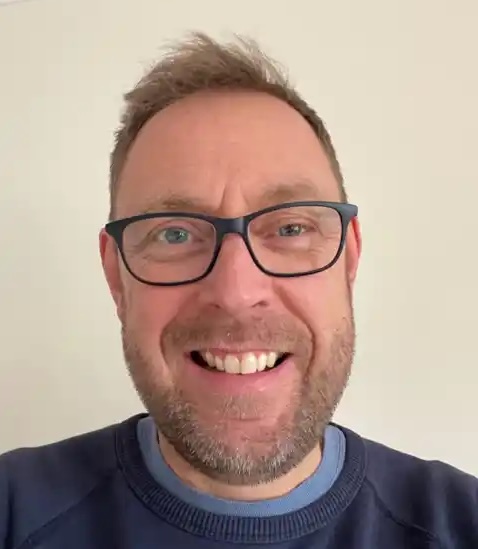
Welcome to the one hundredth episode of the Wonder Space podcast, which is an expression of a family trust called Panapur. My name is Steve Cole. And since September 2020, I have asked the same six questions to over 100 people from around the world. It has been a joy and privilege to draw out wisdom and treasure from wonderful people over the past few years. As we reached episode eighty and ninety, a few people asked how we were going to mark 100 episodes.
Steve (host):
And the answer ironically came as a result of Jaz O'Hara from Worldwide Tribe and Asylum Speakers, who was our first ever guest on Wonderspace. She invited me to an event to launch her new podcast series and introduced me to Chris Nash, who is the director of the European Network on Statelessness. As I spoke to him about his work, I acknowledged that I had never considered the issue of statelessness, which impacts the lives of over half a million people across Europe. So after a few compelling conversations with Chris that led to a walk and a meal with the ENS team, the Panapur trustees and I made a call to use our hundredth episode to amplify the issue of statelessness. Before we launch into questions, we start as we always do, with wonder.
Steve (host):
I am grateful to Andrew and Lex and others from Ask Nature and the Biomimicry Institute for blowing the fuses week after week. Here is another moment to help us rewonder.
Ask Nature:
Bottlenose dolphins develop lifelong friendships early on that will benefit them through shared information, cooperation, and in other ways throughout their lives. In both males and females, dolphins choose their friends carefully, spending more time with these individuals and strengthening these bonds over decades. For males, this helps them form alliances that boost their success in securing a mate. Some males have been found to maintain these strong friendships for more than thirty years. Juvenile females also seem to understand that these friendships are important to develop, and spend time bonding with unrelated females who share creative foraging strategies.
Ask Nature:
When females share this type of information with each other, they can boost the survival of their calves as well. So whether caregiving or cruising, dolphins benefit from both seeking out companionship and from offering it to those they encounter.
Steve (host):
In a moment, we will orbit around our six Wonderspace questions with our guest Christiana Bukkale. But here is Chris Nash, who in under two minutes unpacks the story of the European network on statelessness.
Chris (ENS):
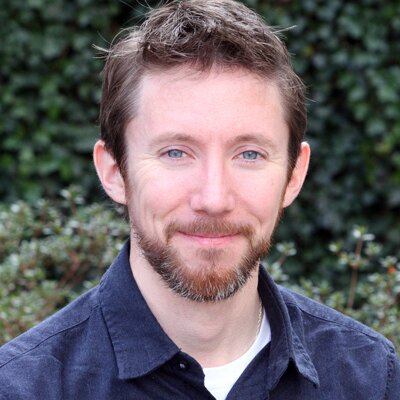
So when I started working on statelessness back in 02/2010, it really was a a forgotten issue. You know, back then, there was only a handful of NGOs and academics working on the issue. You know, it wasn't on national government policy agendas, and this was contributing to stateless people being even more marginalised, you know, living in the shadows without access to their basic rights or the opportunity to acquire citizenship to to end their spadelessness. So I and a few of us really wanted to do something about this, and we had this amazing meeting where we all came together in London in 02/2012. And it was one of those meetings where the the energy in the room was such that within an hour, had a name, a mission statement, and ideas for a website.
Chris (ENS):
And, you know, that's how the European Network on Statelessness was born in 02/2012. And then since then, we've grown to have, you know, 170 members in in 41 European countries and a staff team of of 10. So it's really mushroomed. And I guess, a nutshell, what we do, we we we try and act as a catalyst to inspire change. And as a network, we act as a coordinating body, Now that could be supporting our members with legal advice or litigation work.
Chris (ENS):
It could be providing them with sort of the data and information they need to lobby their governments at national level, or we can act as an interlocutor towards the European Union or the Council of Europe or in other global processes trying to advance the rights of stateless people. And last year, we were pretty excited to celebrate our tenth anniversary as a network, and we're really proud of what we've achieved, but there's so much more we want to do. But in order to sort of meet our ambition, we need to find new partners, new donors and new supporters to really drive forward change because we believe ending statelessness is possible.
Steve (host):
You can find out more about the network at statelessness.eu. Here is Chris again providing a runway into our six questions and telling us why he nominated Cristiano.
Chris (ENS):
So when we set up ENS back in 02/2012, to be honest, we were a bunch of policy people. We were we were really passionate about the cause, but none of us had lived experience of statelessness. And in hindsight, you know, we weren't fully representative. So when we were putting together our last organisational strategy back in 2018, we decided we wanted to better centre stateless people. We wanted to make sure that they were informing and helping us to deliver our mission.
Chris (ENS):
And to to put that in motion, we we embarked on a mapping exercise to try and find and and reach out to stateless people and stateless groups across Europe. And and now we have a a group of, stateless change makers, as they like to be called, who we meet on a monthly basis. And we, you know, we try and facilitate a discussion space, but also to try and help enable and build their capacity to have their voices heard in policy arenas at national level and across Europe. And I guess it's through that process that we came into contact with Christiana, who was doing something a bit similar herself with her State Free initiative. And we immediately gelled.
Chris (ENS):
She came onto our advisory committee, our board of trustees. And I have to say that Christiana and the other stateless changemakers, they really inspire me and the rest of our team in terms of what they do. Christiana has assumed such a leadership role on the issue in Europe and globally. And I think it's really through, you know, hearing from the perspectives of people like Christiana that we can bring about change. And it's for this reason that I wanted to nominate her for your hundredth edition of the of the podcast because people need to hear her so we can achieve the change we want to see.
Steve (host):
Christiana, it's so good to have you on board for our one hundredth episode. If we could do a fly past over any part of the world that is significant to you, Which place, city, or country would it be and why?
Christiana:
I would actually prefer to do a fly past in space actually, simply because I just love to look at spaces that are maybe still free from our human beings' need of control or for control. So I would love to actually look at a space that hasn't been reshaped yet, that hasn't been changed yet, and hasn't been maybe sectioned into different kinds, but is still free from the touch of humankind.
Steve (host):
Christiana, give us a glimpse into your life story so far, with an emphasis on what you are doing currently.
Christiana:
I was born in Germany, I grew up in Germany, and I was born as a person who was stateless. So I'm a person who doesn't have a nationality. That was something that shaped my life but I didn't really notice as a child. I noticed that things were different but I also noticed that my parents were very much focused on making sure that I focus on school, that I focus on education, that I focus on unfolding my true potential. So, I focused on friends and fun and dancing and everything else And also started working in a more happy place of corporate, meaning that I worked in communications and media.
Christiana:
And then at some point when I grew older, statelessness kind of caught up in me. And that led to a situation in which I decided to actually focus more on the topics. And that also led to a situation in which I'm now the founder of an organization that is called Statefree. We work to empower status people by building community with them, by creating visibility for the issue and also by realising the access to equal rights for them. And that is something that I decided to do mainly because at some point I also understood that while I always thought that I am the only one who's stateless that this is actually not true but that there are up to 15,000,000 people worldwide and I decided that I want to be one of those people who can maybe improve something by actually contributing something to the change.
Christiana:
So, when we started Safe Free, we felt like what was needed is a digital space for stateless people to connect to each other, but also for them to connect to the organisations that were working on statelessness. That is something that was very important to me, especially as I understood at some point that there are organisations that are working on a topic, and I myself didn't even know. At that time I was 25 and hadn't heard about any of those organisations. So we created an online platform actually for people to connect and to share their experiences with each other and their knowledge with each other. All of that with the goal of empowering status people.
Christiana:
And at some point we noticed that while community is very important and it's important to create a sense of belonging for people who have maybe been very isolated in their experience as a stateless person, we also noticed that true empowerment happens when people have access to basic human rights. So we decided to actually take that step, one step that I was very reluctant of because as a stateless person you are not allowed to vote. So I had kept a strong distance to politics simply because I didn't want to confront myself again with another area in life that I didn't have access to. But we still decided to at least try it out. And with politics, we are currently very much focused on the German and European space.
Christiana:
And our goal is to make sure that people who are stateless in Germany currently we have over 122,000 people who are without nationality something that is not known to the broader public, oftentimes also not known to politicians in Germany and we have decided to raise awareness in politics, educate politicians on the reality of saintlessness currently in Germany and have been working very closely actually and collaborating very closely actually with members of the German parliament to define and identify the different parts of legislation that need to be changed in order for status people to actually have access. And while we do this work, we make sure that we focus it on the community. So we have been working together with status people in how to prioritise the different issues we are facing, in how to communicate the different issues we are facing and making sure that our approach is very community centred.
Steve (host):
Where on earth is your place of reset or recharge?
Christiana:
My response to this question is very cheesy, but my place of reset is definitely my mom. She is a person that is extremely, has a very calming and content nature. And whenever I go to visit her I seem to forget all the stress that surrounds me and all the busyness I actually feel and also the way she actually also empathizes and sympathizes with my busyness and society's way of busy being busy. She's just a person who has decided to not live that way and that is something that I can then just take in whenever I'm in her space.
Steve (host):
What wonder of the natural world excites you the most?
Christiana:
For me, it's mountains and forests. I had the pleasure of growing up in Munich and Bavaria, so I have been fortunate enough to be surrounded by the Alps, so by mountains but also rivers and trees and forests. And the air just feels differently when there's space to breathe, when there are not too many buildings and too noisy and crowded streets. So, whenever I have the chance to be with nature and surrounded by trees or mountains, that's when I can kind of breathe deep into my body and breathe out and just feel who I am as a human being.
Steve (host):
What is your story of hopelessness not your own about a person, business or nonprofit who are doing amazing things for the world?
Christiana:
In general, as a person, I always thought of myself as a person who has a lot of hope. I have to say with all the things that have been happening in the last few months, but also years since the pandemic started, I feel like this level of hope has been decreasing step by step, sometimes even without me actually noticing. And then I met a person in like two or three months ago and we were in a discussion and at some point we talked about what he was actually doing in life. And he shared that he is currently building a school in Germany. Was a person who had an Iranian background, came to Germany at the age of two, so also was very much aware of how it is to grow up grow up in Germany as a maybe non German person or a person who's not perceived as a German and what he told me was that he wants to make sure that we have schools in which children can grow up with knowledge that is decolonialised, with content that tells them what the world actually should be like, with a curriculum that teaches them how to also interact with human beings but also with the world and with nature.
Christiana:
And actually when he shared that with me, I noticed that I started crying and that was very surprising to me. I'm not a person that cries easily. But in that moment I understood that I had lost so much hope for the future, although I wouldn't have thought so, but in that moment I realized that what he told me gave me so much hope because starting with children and starting with education for me seemed like something that would actually make a difference in the future. So currently, that's my story of hope.
Steve (host):
Finally, Christiana, as we prepare to re enter the Earth's atmosphere, what insight, wisdom or question would you like to leave with us?
Christiana:
I would like to leave a quote. It's a quote that a person shared with me in summer during a networking event that I attended. We talked about politics and the potential for positive change. And in this conversation I shared a lot around statelessness, around my own experience with statelessness, but also my perspective on nation states and the relationship between nation state and the individual. And then the person shared that quote with me which was Nationalism does nothing but teach you to hate people you never met and to take pride in accomplishments you had no part in.
Christiana:
And when he shared that, my first reaction was actually laughing because in that moment it felt like, ah, so that's the vocabulary that actually explains what I feel oftentimes. It also reminded me of situations as a child. I often thought about why or I asked myself why Germany wouldn't just give me citizenship. For me as a child it was I just couldn't understand why it would be why Germany would make it so hard for me to actually belong, to actually get this citizenship because it's just the nationality and why wouldn't they because I was born here. And when reflecting on that question, the older I got, the more I also understood that one thing that I didn't understand about it was that it would be easy for Germany to actually give me access because I used to think in the past I used to think what harm does it do to Germany if I get a citizenship?
Christiana:
And I understood that there is actually no harm but there are certain ideologies maybe tied to it. And that made me realize that when it comes to nationality, I feel like oftentimes there is this sense of scarcity and this mindset of, oh, we can't give it away to those people, oh, we need to protect the citizenship and we can't just share it with people. But now that I understand what sightlessness is and I understand how all of this is structured, I also understand that giving access to citizenship doesn't take citizenship away from another person. So actually, it would be something that is very easy to share with the world. And instead of us focusing on this scarcity mindset, we should actually focus on the abundance of it because there should be abundance of human rights and there should be an abundance of nationality, in that sense also.
Steve (host):
To find out more, follow on socials or to join their campaigns, go to statefree.world. On behalf of James Perry and the Panapur board, I want to thank Christiana and Chris for being part of our hundredth episode. Thanks also to all our guests who have shared their wonders and stories of hopefulness over the past two and a half years. A shout out also to Andrew Howley from ask nature, my son Sam for his editorial work, and finally to Dan Potter from Oodle Design, who has designed and produced every episode, including the website. Let's continue to share our stories of hopefulness that makes a name for someone else.
Steve (host):
We need them like never before. Thanks for listening.