Episode #
53
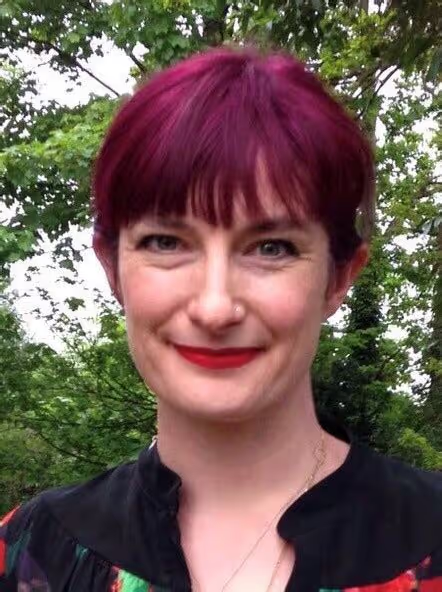
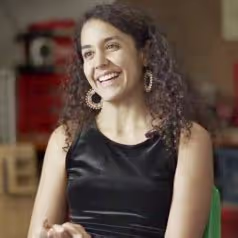
Sabrina Chakori
Episode Summary
Q1: Place
If we could do a flypast on any part of the world that is significant to you, which place, city or country would it be and why?
Brisbane
Q2: Life
Give us a glimpse into your life story so far with an emphasis on what you are doing currently?
Born in 1992 which was the first year of the first Climate Summit in Rio. Actively involved in campaigns from an early age and started working on economic de-growth way of organising societies. Completing a PHD on how we can redesign our food system. In 2017 founded the Brisbane Tool Library disrupting the consumer system that tells you to buy your solution.
Q3: Reset
Where on earth is your place or reset or re-charge?
Camping and hiking in Isolated places in Australia
Q4: Wonder
What wonder of the natural world excites you the most?
The mysteries of the ocean
Q5: Hopefulness
What is your story of hopefulness (not your own) about a person, business or non-profit who are doing amazing things for the world?
Collectives such as The Kayapo indigenous population in Brazil who preserve the natural beauty and biological richness of the Amazon.
Q6: Insight
As we prepare to re-enter, what insight, wisdom or question would you like to share with us?
Be courageous, speak up, think out of the box and defy the current way of thinking.

Transcript
Speaker 0:
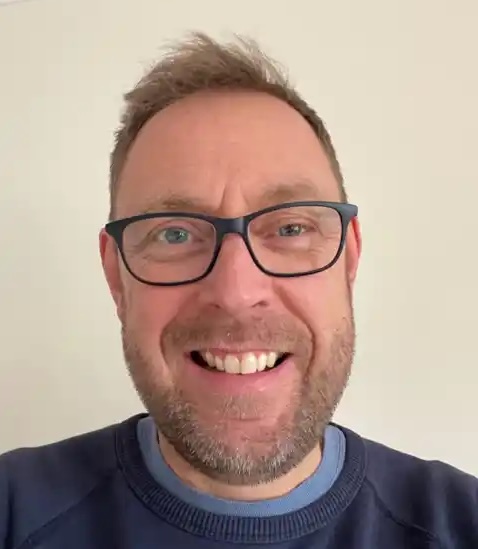
Welcome to episode 53 of the Wonderspace podcast. It's great to have you on board. My name is Steve Cole and over the past year I have been asking the same 6 questions to amazing people from around the world. The questions orbit around wonder and hopefulness, and the setting for each journey is a shared window on the space station from where we see everything from a different perspective. Before we introduce our guest, our friends at asknature.org are going to help us to rewonder.
Speaker 1:
Hermit crabs have a social network that makes house hunting as efficient as possible. Whenever a good-looking seashell washes ashore, crabs throughout the vicinity will check it out, lining up in size order like a class of elementary school children. Eventually a big enough crab appears and moves into the empty shell, vacating a slightly smaller shell, possibly perfect for the next inline. Many crabs then upgrade their living quarters simultaneously while avoiding the risks of being without a shell for even a few minutes.
Speaker 0:
Our orbit this week will take us from Malaysia to Western Australia and to experience these views with us in this ultimate window seat we welcome Sabrina Chukuri. For more than a decade Sabrina has been advocating for a more sustainable society leading numerous collaborations in various countries around the world. In 2017 she founded the Brisbane Tool Library, a social enterprise that encourages people to borrow tools, camping gear and other equipment which in turn reduces waste and household consumption. Sabrina was nominated by our 16th guest Donnie McClurkin from the Post Growth Institute. Here is Donnie on why he nominated Sabrina.
Speaker 2:
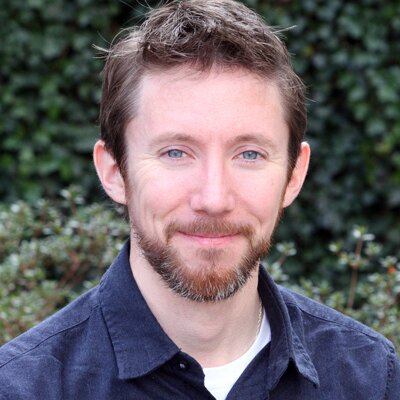
I nominated Sabrina Ciccori because she inspires me so much with her unique blending of academic research, social entrepreneurship and activism and she really, really gets to the heart of what it means to bring those 3 things together in meaningful ways to create change in this world.
Speaker 0:
With a panoramic view of Earth, I start by asking Sabrina, If we could do a flypast on any part of the world that is significant to you, which place, city or country would it be and why?
Speaker 3:
I would start flying from Brisbane and the reason being I am located in Brisbane and somehow I like to remind myself to start and act from where you are. So it's a good point of, you know, relocalizing our folks and interests. But if we have to fly, I would go straight into the direct line into the Pacific, the Pacific Ocean. And the image of flying across the Pacific is more than just the beauty of the immensity of the blue planet, but it's really probably a shift away from the anthropocentric world, from the cities, from going into these more natural extension. When we could look down and see the blue planet and the immensity of it.
Speaker 0:
Sabrina give us a glimpse into your life story so far with an emphasis on what you are doing currently.
Speaker 3:
So I'm 29 years old and I'm currently living in Australia. I just moved here 7 years ago from Switzerland, but I have a mixed heritage with also some Moroccan background. And I guess that mixed heritage surely influenced my choices. Why I refer to my age is that I was born in 1992. And 1992 was the first year of the climate summit in Rio de Janeiro and Brazil.
Speaker 3:
So I like to emphasize that detail because I keep hearing even nowadays, you know, we should take climate action for the future generation. And it always sounds to me like a way to postpone the problem. Because if we really look at it, I am the generation that inherited an unfunctional society, a sick planet. I am the generation that has already born with these complex social and ecological issues. But anyhow, so I started when I was 13 and 14 in joining organization, volunteering, organizing protests, being in politics, so all of this in Switzerland.
Speaker 3:
And I've been involved from anti-nuclear protests to anti-deforestation movements, plastic bags movement. But in my 20s I understood that I couldn't choose just 1 of these topics and it was getting really overwhelming because obviously I cared equally about different species, about different ecosystems. I cared about social issues, you know, such as gender inequalities or refugee migrations. So in my 20s, I had to decide where I wanted to focus my energy on. And I tried to explore what was causing all these social and ecological complex issues.
Speaker 3:
And the answer has been that our economic system is unfunctional. Our growth-driven capitalist economic system is the root of the problem, which is impacting the social and ecological integrity of our current times. Since then, I started working on economic degrowth, post-growth way of reorganizing societies. A degrowth society wants to be an alternative to the current growth capitalist system, which basically prioritizes profit and capital accumulation over any other thing. So in a deep growth society, the idea is to prioritize social and ecological well-being beyond GDP growth.
Speaker 3:
And in doing so, we really need to be redesigning entirely society. I'm finishing a PhD at the University of Queensland looking at how we could redesign food system in a post-growth society. For example, if food is a necessary good, why are not food systems not for profit? Why is food a commodity? Why are we speculating on food?
Speaker 3:
I think that the most exciting part of my work in the last almost 5 years has been through the Brisbane Tool Library. So I started in 2017 the Brisbane Tool Library, which is really like a book library, but for tools and other equipment. So we collect secondhand items and like a book library, people can just borrow these items, so they don't need to buy them. And that fits the economic degrowth narrative in the sense that in order to respect the ecological limits of the planet, which means respecting ecosystems and ecosystem services, we need to contract the use of resources and therefore we have to reduce productivism and consumerism. So the tool library, the interesting part is learning how to collaborate, because we come from a very individualized society.
Speaker 3:
So for especially my generation, we come from educational system that prioritize individuals over the collective, but also a very productive consumerist system that tells you to buy your solution, you know, rather than getting society reorganised. I think that at the bottom line of all what I'm doing is trying to keep alive the idea that a non-capitalist society can exist, that a prosperity beyond growth can exist and we should be bold and courageous about it because we don't have much time but also it's our duty to come up with different imaginaries.
Speaker 0:
Where on earth is your place of reset or recharge?
Speaker 3:
I'm very connected to nature and I think that I do enjoy escaping the city, going camping and hiking And 1 of the things that I love of Australia is that it's very easy to find isolated places here, you know, without almost any artificial interference. The ocean is surely my safety net. And the other thing is being, you know, from mixed cultures and having lived and volunteered across the world, I think I found my place of reset in people because it's really hard to fit an identity or a culture when you come from a globalized background. And so I found that, you know, with time, probably people, and in this case, all my close friends in Australia became my home, became my reset. So that's probably not a physical place, but it's really an emotional safety net that I've built around me.
Speaker 0:
What wonder of the natural world excites you the most?
Speaker 3:
The wonder of the natural world that excites me the most is the ocean. And as we are flying over the Pacific, you know, we're trying to rationalize these interests in the ocean. And I think that there's few things that intrigue me. First of all is the fact that there's still so many unknown parts and mysteries and remind us how much we still don't know. But then I was thinking that I've always been fascinated, although I understand the negative social impacts of those events, but like by tsunamis and in general, water-related extreme events.
Speaker 3:
And I think they fascinate me because of their strengths, because they somehow remind us how, you know, how humble we should be in front of nature and how humans are fragile and vulnerable. It teaches us to relearn really to be more humble and respect the natural cycles and limits.
Speaker 0:
Sabrina, what is your story of hopefulness that's not your own? About a person, business or non-profit who are doing amazing things for the world.
Speaker 3:
So my story of hopefulness is around the collective and let me explain. I think that in the global north countries, in the western world, there's a tendency to designate a hero from a top down level, an individual who makes a difference. But when I think about greater people, I like to think about the resilience in people that they show it every week. I think of people that are still undernourished and they have still to wake up and fight to nourish their family or themselves. We can see already, for example, the climate impacts on Madagascar and other areas where drought is so intense that these populations are completely dependent from other imported food sources.
Speaker 3:
When I also think about this question, I think of collectives, and that's another important thing, because if we start aiming and taking as a role model collective way of living. We would tend to imitate them. And as collective we can think of, for example, the Caiappo, which is an indigenous population in Brazil, or other indigenous populations, for example, of the Amazon forest, that they keep fighting big lobbies to preserve the natural beauty and importance and the biological richness of the Amazon forest. But we also can think about all these people that I really have high esteem of, that have the courage of speaking up for their rights or for issues in countries where that openness is not welcomed. And in fact, well, I took the Amazon forest as an example, but we know that there in other parts of the world, some so-called activists disappear.
Speaker 3:
And so obviously, we have a lot of these people sacrificing, you know, every week, every day and maybe not having the same attention as Greta Thunberg or some American politicians or some other more mainstream activists that feed the media.
Speaker 0:
Finally, as we prepare to re-enter, what insight, wisdom or question would you like to share with us?
Speaker 3:
I would like to share the question of how can we live in abundance? And obviously it's really hard to summarize everything in a short interview but in a capitalist society everything is around creative scarcity and therefore competition or unequal pre-distribution or redistribution. And I think that we have to be brave enough to relearn how abundance can be maintained in our society. Probably we really need this time for us to have a strong imaginary, because even when we see this movement, which is great, but it's not enough. People protesting for the climate, people protesting for social rights.
Speaker 3:
Really what we are lacking is what are we protesting for? And if I can just give another example, it's like we keep hearing that we need renewable energy, but we don't hear what do we need renewable energy for. You know, how would society look like, you know? It's not just about how we provide energy, but what do we use that energy for. And I think a prosperity of a country should be based on how much free time people have and not how much productive we are.
Speaker 3:
So I think it shouldn't be a passion, it should be a responsibility of being courageous enough to defy the current way of thinking and trying to really think out of the box and really speak up. Because if not us, someone else is suffering at our place. And I guess that's what motivates me to do what I do as well.
Speaker 0:
I encourage you to dive into the work of Sabrina, Donnie, the Post Growth Institute and other degrowth organisations and movements around the world. To engage with the previous 52 Wonderspace episodes go to our website www.ourwonder.space I want to thank Sabrina for joining us on Wonderspace and I Hope you can join us next week for more wonders and stories of hopefulness.