Episode #
43
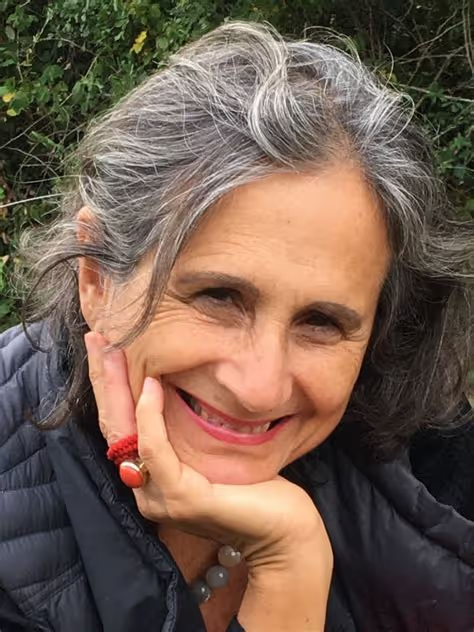
Thais Corral
Episode Summary
Q1: Place
If we could do a flypast on any part of the world that is significant to you, which place, city or country would it be and why?
Italy
Q2: Life
Give us a glimpse into your life story so far with an emphasis on what you are doing currently?
Brazil under dictatorship, Italy, journalism, back to Brazil, planted into feminism, green movements, radio network for women, WEDO movement, Earth Summit, Founded Sinal Do Vale regeneration campus.
Q3: Reset
Where on earth is your place or reset or re-charge?
Remote places of nature
Q4: Wonder
What wonder of the natural world excites you the most?
The universal intelligence that we call vitality
Q5: Hopefulness
What is your story of hopefulness (not your own) about a person, business or non-profit who are doing amazing things for the world?
Sekem in Cairo and the founder of the Greenbelt movement Wangari Maathai
Q6: Insight
As we prepare to re-enter, what insight, wisdom or question would you like to share with us?
A quote from Indian philosopher Vimala Taka. 'When you have the humility to be with people in the simplicity of what you are, not pretending to be what you are not, not trying to hide what you are, then communion takes place, you understand the other person more deeply. Then all knowledge is made possible and you notice that a new tenderness of affection begins to blossom'.

Transcript
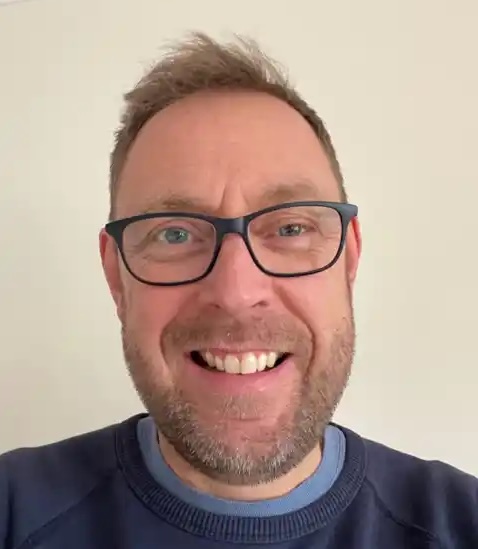
Steve (host):
Welcome to our 43rd Wonderspace Journey. My name is Steve Cole and since September 2020 I have been asking the same 6 questions to people from around the world. The questions revolve around life and wonder, places of reset and stories of hopefulness. The setting for all of our interviews is a virtual window seat on the space station 250 miles above Earth where we see everything from a different perspective. Before we introduce our guest our friends at asknature.org are going to help us to rewonder.
Ask Nature:
How does a tiny muscle hold on to a rocky shore under the pressure of crashing waves? Its many anchoring threads are tipped with a two-part adhesive. First, lysine pushes salt ions out of the way. Then DOPE performs chemical bonds directly with the rock. These molecular forces multiplied many many times keep the muscle firmly in place.
Steve (host):
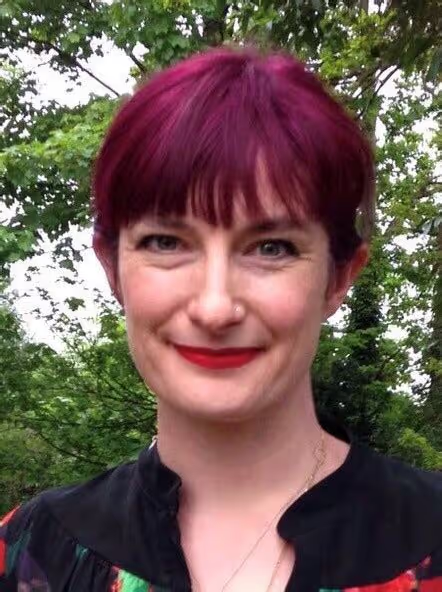
This week at orbit will take us over France, Italy and the city of Cairo. And to experience these views with us in this ultimate window seat, we welcome Thais Carrat. Thais is a social innovator, entrepreneur and ecological activist. She is the founder of Sinal de Vale, a Brazilian regeneration campus located near Rio de Janeiro, which serves as a centre for the regeneration of ecosystems, communities and individuals. Thais was nominated by our 10th guest on Wonderspace, Pedro Tarac from Argentina.
Steve (host):
Here is Pedro telling us why he nominated Thais.
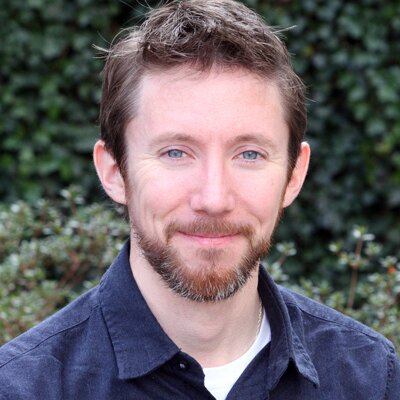
Pedro:
I'm so proud of nominating Thais Corral for Wonderspace. Her life story has been an inspiration for so many of us at the regional level in Latin America and at the global space as well. Her past in feminism, later on in sustainability, and now in very concrete regeneration projects in the northeast of Brazil and in Rio de Janeiro have actually inspired all of us.
Steve (host):
A shorter version of this episode together with footage of this journey over Italy and Cairo can be found at ourwonder.space I start by asking Thais from this window seat 250 miles above earth which place city or country would you want us to fly over and why?
Thais:
The country that comes to my mind is Italy, because I think that Italians over centuries have refined that culture with nature and do it in a way that is all like seems to be 1. And so that's probably my most permanent reference. Of course, I like nature alone. I live in Brazil and you have like these cathedrals made by nature, you know, the big trees, the mountains, the combination, the shapes that nature gives. But if I would say something that really touched me deeply is that static of nature and human culture as 1.
Steve (host):
Thais, give us a glimpse into your life story so far with an emphasis on what you are doing currently.
Thais:
As a young person I went to Italy, I lived there for 5 years. This was very critical in my education because being from Brazil and living when I was a young adult during the dictatorship, the horizons were quite narrow. I did the business administration more into finding a high up job, a well-paid job and being an executive. And I changed all that to go to Italy. And it was the country that had the most progressive communist party and it was between socialism and communism and socialism and capitalism and so I had the privilege of being in Italy in those years.
Thais:
I completely changed my career there and became a journalist, which was very aligned with my curiosity and willingness to know and to know people and have access to ideas and be informed and formed from people that I admire and had lives that were very different from the references I had. So when I came back to Brazil, it was 5 years later, it was already the time when the dictatorship had ended and we had a civil government and I was totally plunged into feminism and movements and the Green Party that was being formed in Brazil. So that was like my ecosystem, you know, and from there I invented a life. I ended up forming these 2 organizations, 2 NGOs. 1 was on human development and associated with gender, women and environment.
Thais:
The other was a radio network because I was a journalist in Italy. I worked on radio and saw the potential that radio had to reach women, to reach women where they are. I was totally connected to this work. We built this network of 400 women's radio programs and also created this big, huge movement, also with an organization that I was invited to join in the United States that was called WeDo, Women, Environment and Development Organization. And with WeDo, we kind of create a new ground for women.
Thais:
That was women not talking only about questions that were related to the body or related to violence against women, which were the main agenda of the feminists until that time, but to take about the fate of the world, you know, and talk about sustainable development and talk about how our civilization could be transformed. I remember when we started the 1992 Earth Summit process, knowing all the documents just talked about population. The problem was population. And we really fought against it and succeeded because the last documents of the Rio Summit had thousands of, have hundreds of references about women, about humanity. So I would say that my whole life since then has been about connecting like as an educator and as a change maker, connecting people to their own humanity, through the views of women, through the views of other people that maybe are not the ones that they're related to.
Thais:
So recently, like the last 15 years, I decided to dedicate the rest of my life to a territory, you know, and to really improving and creating models for this territory, which is Sinaldo Valley. And we want to show, like, all this idea of reforestation and carbon sequestration by forest and improve land degradation. We have the UN decade for ecosystem restoration. But what we want to show with Sinal is that this should be done in a decentralized way by groups of people and it has to include different aspects, not only the environmental, not only the reforestation aspects. So that's where I am right now.
Steve (host):
Where on earth is your place of reset or
Thais:
recharge? My place of reset or recharge is in Aldo Valley. The more remote it is the better it is for me. The most remote and the most isolated in nature, the most recharge I feel because I feel that our civilization right now is too noisy. Now even now, which is not so far from a big city, we are in nature, it's beautiful, but there are too many people, but the soul recharges is in remote places of nature.
Steve (host):
What wonder of the natural world excites you the most?
Thais:
I think the wonder that excites me the most is to recognize how this universal intelligence that we call vitality, the vitality of the universe, finds associations, alignment that are unbelievable and they do it without thinking about, without using what we call the intellect. They just find each other. So every time I see that, I have this sense of our being like enchanted by this place we are part of.
Steve (host):
Thais, what is your story of hopefulness that's not your own, about a person, business or non-profit who are doing amazing things for the world?
Thais:
I would like to give 1 organisation and 1 person because I think that over the cycles of our lives there are different influences, different people and the situations that influence you. But 1 that certainly keeps being a reference for my life has been, is an organization in Egypt that's called Seqim. When I visited them for the first time in 2010, I had this sense of something unique, you know? And it had to do with this holistic perspective, you know, because I mean, You have many entrepreneurs that do amazing things, but there was this aspect of creating like an example of different combinations of the business, of the sustainable development, of the social in a very difficult situation, which is the desert, and a very strong vision, no, with spirituality and art and things that I truly believe that I have to be a strong component. So I still celebrate so much in Sequen, and it was a strong inspiration for my doing Sinal.
Thais:
The other person that I would say that was inspirational to me, her story and how she kind of managed it, It was Vanguardi Matai. I happened to be then. She won the Nobel Peace Prize. But when I met her, she had the Green Belt Movement and the work with women. She was the first woman to have a PhD in Kenya, I think on chemistry.
Thais:
But sure, her heart was always in politics because she comes from a country that is so unequal, and so I'd say brutal in terms of the minorities and all that. And she was saying the way she started the Green Belt movement is that she had thought that she wanted to build a movement for democracy. And then she saw that most of the people were illiterate and she couldn't even talk to them about democracy and politics and all these concepts that were very far from their reality. But the space in which they live and improving the space in which they lived, they all would understand, I mean, how taking care of seedlings and planting trees would help to restore things that they had lost in this brutal development, like restoring the rivers, the places which were so dear to them. So that's how she started the Green Belt Movement.
Thais:
And most of the ones, I don't think she thought at the beginning about women, but the ones that really opened up to follow that orientation were women. And then it became the Green Belt Movement, you know, formed majorly by women. But it came from that idea that no matter which is the small action you do, if it connects you from the heart, connects you to that connectivity of where you are and improving that area, it has a big force and impact because it connects you to something that is very real. And I think that when I talk and I see the 21st century and the transformation we had to do, I think this is, I would say, is the main challenge. It has to make sense to everyone.
Thais:
It's not just the ones at the top or that have the great ideas or the great concepts and to know how to kind of move the world, the great thinkers. It's how to make people empowered in a very real way. So Vangari was the first 1 that I could understand that because she did something of an impact.
Steve (host):
Finally as we prepare to re-enter, what insight, wisdom or question would you like to share with us?
Thais:
The insight I would like to share with you is an Indian philosopher that I am very fond of. Her name is Vimalataka. She has given me so many insights. Can I read a quote of her? When you have the humility to be with people in the simplicity of what you are, not pretending to be what you are not, not trying to hide what you are, then communion takes place.
Thais:
You understand the other person more deeply, then all knowledge could make possible. You notice that a new tenderness of affection begins to blossom. So is that the insight of not pretending that in order to accomplish things you just have to be, you know, because we are all 1 and we kind of meet at some places, the place of humanity that is a thread between all of us and sometimes like boundaries that are insurmountable like just dissolve, so that's my insight.
Steve (host):
To find out more about the work and vision of Thais, go to Sinaldivale.org. In her story of hopefulness, Thais talked about an amazing work in Cairo and you can find out more at secem.com. She also spoke about the Greenbelt movement in Africa which you can find at greenbeltmovement.org. For our second year of Wonderspace we have redesigned the website to make it easier to engage with all the previous 42 episodes. Go to ourwonder.space.
Steve (host):
I want to thank Thais for joining us on this Wonder Space and I hope that
Thais:
you