Episode #
41
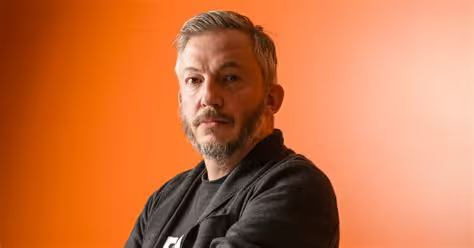
Giles Duley
Episode Summary
Q1: Place
If we could do a flypast on any part of the world that is significant to you, which place, city or country would it be and why?
Planet Earth
Q2: Life
Give us a glimpse into your life story so far with an emphasis on what you are doing currently?
Photography, documenting the impact of conflict, stood on IED in Afghanistan losing both legs and an arm, over a year in hospital, back to Afghanistan within 18 months, established the Legacy of War Foundation working around the world.
Q3: Reset
Where on earth is your place or reset or re-charge?
The Kitchen. "I will never make some nice photograph, if I haven't eaten with them first."
Q4: Wonder
What wonder of the natural world excites you the most?
The Sea. "I was invited by Nektonmission to go on a deep sea dive in one of their small to manned submarines."
Q5: Hopefulness
What is your story of hopefulness (not your own) about a person, business or non-profit who are doing amazing things for the world?
Gish. We have managed to save a dance school in South Africa, support Syrian refugees in Lebanon, funded the mining projects in Lao, and support a children's ward of the emergency hospital in Kabul.
Q6: Insight
As we prepare to re-enter, what insight, wisdom or question would you like to share with us?
Focus on the things I can control, and not worry about the things I can't

Transcript
Steve (host):
Welcome to episode 41 of Wonderspace and the first orbit of our second year. My name is Steve Cole and over the past 12 months I have been asking the same 6 questions to amazing people from around the world. The questions orbit around wonder and hopefulness and the setting for each journey is a shared window on the space station 250 miles above Earth from where we see everything from a different perspective. Before we introduce our guest our friends at asknature.org are going to help us to rewonder.
Ask Nature:
How do honey bees create perfect hexagons? They don't. They simply make wax bubbles around themselves and pack into a space as tightly as they can. That forces a six-around-one pattern. If there were soap bubbles, you'd see surface tension pull them into flat borders instantly.
Ask Nature:
But thick Soft wax moves more slowly and is pulled into straight lines only as it cools, transforming the circles into hexagons in the process.
Steve (host):
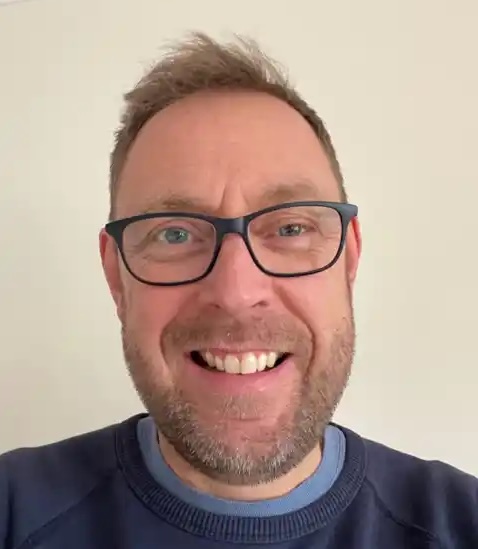
Our night-time orbit this week will take us from Central Africa to Afghanistan and to experience these views with us in this ultimate window seat we welcome Giles Duley. Giles is a documentary photographer and writer whose work focuses on the long-term humanitarian impact of conflict. Giles is also the CEO and the founder of the NGO Legacy of War Foundation and is a campaigner for the rights of both refugees and those living with disability caused by conflict. Giles was nominated by our first ever guest on Wonderspace, Jaz O'Hara from the World Wide tribe. Here is Jaz giving her reason for nominating Giles.
Jaz:
I nominated Giles as my Wonderspace nomination because I had him on my podcast previously and that episode still blows me away. I go back and listen to it. I learned so much from him. I think he's the most incredible storyteller and I just know the Wonderspace listeners will love him too.
Steve (host):
With a panoramic view of Earth, from this window seat I start by asking Giles, if we could do a flypast on any part of the world that is significant to you, which place, city or country would it be and why?
Giles:
For me it wouldn't be one place. Being up here and looking down on the world, That's what I want to see. I want to fly past the whole world and I can keep spinning around and around and around and watching how the world is interconnected. As a photographer, I spend my life documenting the impact of conflict. And right from the beginning, I was interested in how all the stories or the individuals or the communities interconnected with each other but really that's a concept in my mind.
Giles:
Up here and looking down you really do get a sense of how small the earth is, how we are all interconnected and so for me that 1 significant place, that significant place is Earth.
Steve (host):
Giles, give us a glimpse into your life story so far with an emphasis on what you are doing currently.
Giles:
My own life story so far? But again, being up here, you realize just how insignificant one's own life is when you see the story of the world. But in brief, I'm a photographer. I started out working in the worlds of fashion and music. But then in my late 20s, became disillusioned with that and decided to kind of, I guess, use my skills to try and have some kind of impact in the world.
Giles:
So I turned my focus, I turned my lens, on documenting the impact of conflict around the world. And for the last 15, 20 years, that's what I've been doing, trying to tell the lesser-known stories of war and very much telling the stories of civilians who are caught up in conflict. It was while doing that work that in 2011, I was injured myself. I stepped on a landmine in Afghanistan, losing both my legs and my arm, and spent over a year in hospital. I guess the gift that that gave me was a true empathy and understanding of the people who I document.
Giles:
And so when I returned to work 18 months after my injury, I felt I had a greater purpose to not just tell the stories of people who have been injured by wars, but also to be their advocate and try and see real, positive and direct action happen. So I also set up a foundation called the Legacy of War Foundation. And we try and work with communities coming out of conflicts to help them rebuild their own lives. We don't really serve as a charity. I like to see us as a partner organization that maybe can provide the tools and the skills that are needed for people to be able to rebuild their own lives.
Giles:
In terms of more currently, I've actually just got back from Afghanistan. I was there a few weeks before Kabul fell to the Taliban documenting the work of a charity called Emergency and their hospital there in Kabul. And again, obviously it's a country very close to my heart with my own personal story and I felt again it was important to remind people that the people paying the real cost of this war are the civilians.
Steve (host):
Where on earth is your place of reset or recharge?
Giles:
For me my place to reset is in a kitchen. Whenever I travel the world, I always have a simple rule that I will never make somebody's photograph if I haven't eaten with them first. So whether it be in South Sudan, Afghanistan, Colombia, Angola or Vietnam, the first thing I always do when I meet a family who I'm going to work with is ask if I can cook with them and spend some time in the kitchen and then sit and eat together. And it's my therapy. Not only is it the way that I connect with people, it's also the way that I switch off from many of the things that I document.
Giles:
For me, food is the antithesis of war. Where war is there to destroy and break communities apart, food is all about bringing communities together and truly expressing love.
Steve (host):
What wonder of the natural world excites you the most?
Giles:
The sea. I find it energizing, life-giving. I find it a place of meditation. I live by the ocean. So every morning when I wake up, the first thing I see is the sea.
Giles:
But the experience that really excited me was a couple of years ago, when I was invited by Necton Mission to visit the Seychelles and go on a deep sea dive in 1 of their small two-man submarines. To go under the ocean was, I guess, almost to go back in time, to go back to a time when the earth was a paradise, when we were in harmony with each other. And to be there as a witness for that was for me a spiritual experience, I guess. It was something that took me to another place, another time, and I saw how the world could be. And as somebody that documents devastation, destruction, to see that, it gave me hope and also gave me an understanding that, that as humans, We are just players in a much, much bigger picture.
Steve (host):
Giles, what is your story of hopefulness that's not your own? About a person, business or non-profit who are doing amazing things for the world?
Giles:
A story of hopefulness, You know, that might seem difficult at the moment. I know a lot of people are really struggling because there is so much news around the world that is negative and showing the true horrors of what is happening in the world. And That can be very overwhelming for people. But there's a lot of incredible things happening, a lot of incredible positive things happening. And the 1 that I would like to focus on the story I'd like to tell is about a community called GISH.
Giles:
GISH was set up by the actor Misha Collins, and it's the world's largest online scavenger hunt that happens every year. If you go to the GISH website, you can find out more about that. I don't fully understand everything that they do every year in the scavenger hunt, but I do understand 1 thing, and 1 thing they choose to do, 1 task, is to change a life. And I've become their Change of Life ambassador, which essentially means I share a story of an individual community that I have documented in the previous 12 months. And together, we raise funds to try and have a direct and positive impact on that community.
Giles:
We've been doing it for 5, 6 years now, and we've managed to save a dance school in South Africa, support Syrian refugees in Lebanon, fund demining projects in Laos, and this year we were able to support a children's ward of the emergency hospital in Kabul. Now why is this such a thing of hopefulness? Well it's because of the community that comes together to do this. These are individuals spread across the world, and maybe as individuals I get this feeling myself, sometimes you feel like, what difference can I make? As an individual looking at all the crises around the world, it feels very overwhelming.
Giles:
But what GISH proves is that when we come together, we can make a huge difference. So whilst most of the donations are between 05:10, maybe 20 dollars, when thousands of people come together to create change as a community, we're able to have a huge impact. So this year we raised over $250, 000 for that hospital in Afghanistan. And it's not just the money raised, but you see the sense of solidarity, you see the way the community comes together. And to see in young people this real belief that there is a better way, that we have to make our own stand, we have to make our own commitments to make the world a better place.
Giles:
And if we come together, we can do that.
Steve (host):
Finally, as we prepare to re-enter, What insight, wisdom or question would you like to share with us?
Giles:
Well, I guess the greatest gift that was given to me in terms of insight was when I was in hospital. I spent 1 year in hospital but the first 46 days were spent in intensive care where I could only communicate by blinking with the world. My whole universe was in my mind and those 46 days were incredibly challenging but also gave me a resilience and an understanding that I didn't have before my injury. And the insight I got was to focus on the things I could control and not to worry about the things I couldn't. At that time, as somebody in a hospital, there were obviously operations I had to go through, many surgical procedures.
Giles:
I had no control over what the doctors were doing. I didn't know how long I'd be there. I didn't know what condition I would be in when I left. I realized, though, that if I focused on those things, then I was losing control of my mind. And actually, what I could control was the person I would be when I left hospital.
Giles:
And that insight has always stayed with me. And if I ask most of my friends of the things that are bothering them in life, probably 80% to 90% of the things that are troubling them are things, actually, they have no control over. That could be Brexit. It could be the COVID. It could be the person that they work with.
Giles:
I would say, well, put those things to the side. They have to be obviously in our periphery vision, they are part of our insight and they kind of have to be a factor in every decision we make, but don't have them in front of you because if you have them in front of you, you are blind to the opportunities that are there. And so my simple insight would be to say don't focus on the things you can't control but focus on those that you can and excel at those.
Steve (host):
To see and to find out more about the work and vision of Giles go to gilesdually.com and legacyofwar.com. In his story of hopefulness, Giles spoke about the GISH campaigns and you can find out more at GISH.com For our second year of Wonderspace, we have redesigned our website to make it easier to engage with our previous 40 episodes. The website is ourwonder.space I want to thank Giles for joining us on this Wonderspace and I hope you