Episode #
40
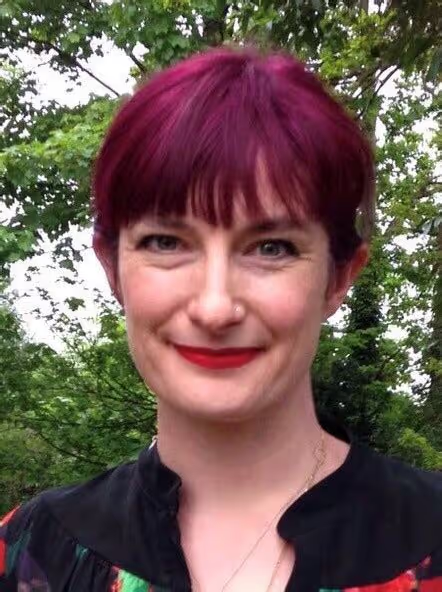
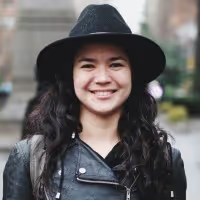
Elsie Iwase
Episode Summary
Q1: Place
If we could do a flypast on any part of the world that is significant to you, which place, city or country would it be and why?
Hiroshima in Japan
Q2: Life
Give us a glimpse into your life story so far with an emphasis on what you are doing currently?
Brazilian and Japanese parents, Psychology and behavioural science, Sustainable and ethical organisational development, Across Generations.
Q3: Reset
Where on earth is your place or reset or re-charge?
The Ocean
Q4: Wonder
What wonder of the natural world excites you the most?
The intelligence behind nature and how everything is so interconnected and beautifully designed.
Q5: Hopefulness
What is your story of hopefulness (not your own) about a person, business or non-profit who are doing amazing things for the world?
Salomon Rettig is a holocaust survivor who eventually found his purpose as a lecturer in social psychology in the States.
Q6: Insight
As we prepare to re-enter, what insight, wisdom or question would you like to share with us?
We operate in two modes, fear which often contracts life and growth and love which is open and expansive and a risk worth taking.

Transcript
Steve (host):
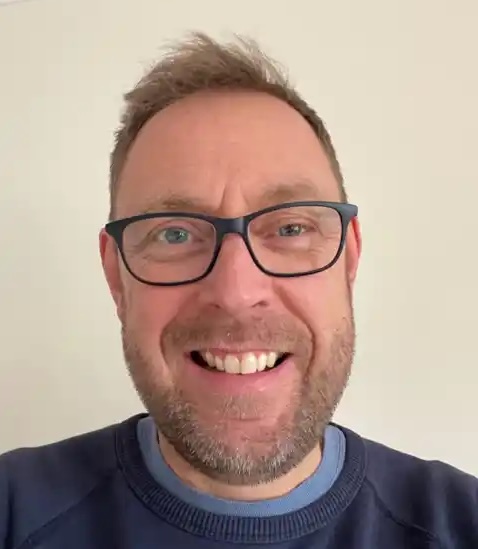
Welcome to our 40th Wonderspace journey. It's great to have you on board. My name is Steve Cole and since September 2020 I have been asking the same 6 questions to people from around the world. The questions revolve around life and wonder, places of reset and stories of hope from us. This 40th episode will be the last of our Wonder Space year before we take time out to reset and redesign in readiness to go again in September.
Steve (host):
The setting for all of our interviews is a virtual window seat on the space station 250 miles above Earth where we see everything from a different perspective. Our final Wonderspace orbit of our year will take us down the east coast of America to Brazil and to experience these views with us in this Ultimate Window Seat, we welcome Elsie Iwasi. Elsie is living and working between New York and Hawaii and is an innovation leader and systems thinker, helping organizations to redefine their purpose and supporting the transformation of business, culture, communities and individuals. We also love Els's vision and work with both young people and also elders which she shares about in her own story and in her story of hopefulness. A shorter version of this episode, together with footage of this journey from North America to Brazil, can be found at ourwonder.space.
Steve (host):
I start by asking Elsie, from this window seat 250 miles above earth, which place, city or country would you want us to fly over and why?
Elsie:
I would like to start in Hiroshima in Japan. And I've never set foot in Japan, but Japan is part of me and I feel it so strongly because it's not only in my genes. Hiroshima and Japan is where my ancestors are from, so my paternal lineage is from there. But Japan is also in me through the culture and values that I embody. So my Japanese grandparents, They lived in rural Hiroshima with their families, their communities.
Elsie:
What they knew of the world was that little town in Hiroshima. And in 1929, they decided to embark on this journey from Japan to Brazil, looking for a better life. And they were really visionaries. They were dreaming big. I always think that they were the first entrepreneurs, you know, just taking the risk.
Elsie:
And my grandmother was only 17. And every time I think about their journey, so just launching themselves into the unknown, it just really inspires me because it's the journey of 2 people who saw the possibility of something bigger for them and for the families that they were about to create. So it really inspires me to dream big and to keep trying to find these opportunities in my life where I can grow and expand the understanding that I have of life. So that's what Hiroshima means to me.
Steve (host):
Elsie, give us a glimpse into your life story so far with an emphasis on what you are doing currently.
Elsie:
So I was born in Brazil. I'm half Brazilian, half Japanese. And growing up in a household where I had those 2 very different cultures together and with my siblings as well, I think that always sparked this curiosity in me. Really about human behavior and just seeing how 2 different sides of humans, 2 different ways of being could coexist. So I think since I was very little, I was always trying to understand why people do the things they do and how they feel differently, how they express themselves differently.
Elsie:
So I remember when I was deciding what I wanted to study in college, I had this thought, like, oh, I really want to study psychology. I think this is what I want to do. I want to understand humans. And my father, son of immigrants, he was very supportive. But also he told me, you know, psychology in Brazil, it might be hard for you to make a good living.
Elsie:
And he was just concerned because for him, it was all about survival and providing for the family. So he was trying to guide me in a good direction. And he did. And I ended up studying law, which was a more conservative choice. But I always remember in 1 of my therapy sessions, years later, I told my therapist this story.
Elsie:
And he said, does your father know how much you pay me every week? And I've always found that story like, oh, okay, I understand. Again, different world views, right? But it was really wonderful to study law, but I did not stay in law for a very long time. I ended up carving a very unique path and ended up working in many different fields.
Elsie:
I did work in law and finance and consulting. But what I landed on was like, how can I combine my interest in psychology and behavioral sciences and wanting to do some good in the world and help people, humans, live better? And I landed in this thing called innovation consulting, which basically the work that I do now is to help companies and organizations discover what their true purpose is. So what is the value that you as an organization add to the humans that you're serving? And then how do you put that in practice once you're able to verbalize it?
Elsie:
And it's been really wonderful to see how, yes, with my work, I get to help organizations be more ethical and more responsible. And currently, I'm working on a project around regeneration, which I do believe is the future. And regeneration is really the idea of every human being and us as a species, we're going to leave a footprint on the world. This is just part of the fact that we're here interacting with everything and we're changing things. And right now we've been thinking about sustainability as, oh, let's stop doing harm, let's stop polluting, let's stop carbon emissions, and regeneration is the step further.
Elsie:
So how can we move millions of humans to understand that we can also have a positive footprint. It's not only about not having a negative footprint or doing no harm, no, we can actually coexist with nature and start healing our social and ecological systems. So the core of this project is the respect for all life, not only human life. And also there's another project that is really close to my heart. It's a personal project, not work, not paid work at least, called Across Generations.
Elsie:
So when I moved here to the US, I really saw how different the culture here around elders was when compared to how I lived in Brazil and Japanese culture. And I really saw how we are losing something as a society when we stop listening to our elders. Our elders are the wisdom holders, the memory holders. And this project, Across Generation, is really about bringing different generations together, so younger generations, to hear the stories of elders and ask questions and have an exchange of ideas where they can start seeing through this more of a panoramic view of reality that elders have that We don't have right now, but they're here to guide us. My husband and I have developed a program, not launched yet, to support teenagers and to understand the interconnectedness of everything in the natural world and the human world.
Elsie:
And the goal is to guide different groups of teenagers who will work together through, how do we envision better futures? To use their imagination and their, not only their hope, but their courage to imagine a different future. So guide them along that journey to envision what they want the future to look like for themselves and for the following generations, and then give them the tools to how can they start making that real. So much of what we deem to be true is that the future is the younger generations, but the future is everyone working together. It's younger generations being guided by elders and elders being inspired by what we're doing, what younger people are doing out in the world because it's really continuing the work that they started.
Elsie:
It's not starting something new. We're all standing on the shoulders of those giants that came before us.
Steve (host):
Where on earth is your place of reset or recharge?
Elsie:
My place of reset on earth is really the ocean. It's not a town or a city. It's really the ocean. Scuba diving is 1 of my favorite things to do. So I just love being immersed in all the beauty of this other world that coexists with ours and where I can see creatures so big like whale sharks or so small like tiny little crabs.
Elsie:
And I really love the feeling of being a guest in that wild world. When I'm there with those creatures, it's really just observing, not interfering, and just being in pure awe. And I'm currently living here in Hawaii, and where I live in this island, there's a pod of wild dolphins that come to the bay from sometimes. And I got to swim with them a few times, just with snorkeling gear, just going there in the ocean and just waiting. So they come, and if you stand still, they'll come close to you and circle around you and just swim with you like 5 feet away from you.
Elsie:
If you extend your arm, you could touch them. And again, it's just that power of the ocean that once you have that experience, once you interact with another species like that, and it's just impossible to not love the ocean, not love the dolphins, and it's impossible to not see how we're part of it and it's part of us so it really changes you. This connection with life at this level really changes you.
Steve (host):
What wonder of the natural world excites you the most?
Elsie:
Everything excites me in the natural world. It's really the intelligence behind it all, how everything is interconnected and beautifully designed. I always look at things like the bees and the flowers, if we think about how the flowers evolved so the different pollinators would come and be part of that dance with them and the bees, they're all supporting 1 another. And there's an intelligence behind it that it's not just the bees or just the flowers or just the honey or just the pollen. It's just everything coming together.
Elsie:
And just thinking about, like, we get to breathe the oxygen that plants released, how we're constantly in connection with it, How the waters run from underground to springs to rivers to oceans to becoming rain and giving life to everything and everyone around them. Just this interconnectedness and how beautifully everything is designed to fit together really excites me so it's everything, everything excites me in the natural world.
Steve (host):
Elsie, what is your story of hopefulness that's not your own about a person business or nonprofit who are doing amazing things for the world?
Elsie:
So my story of hopefulness comes from my project across generation where I got to speak with some really amazing elders And I got to befriend wonderful people and this wonderful man, Solomon Rettig. He's a Holocaust survivor who was born in 1923 in Berlin. And he has this amazing story of at the age of 10, his mother couldn't care for him anymore. He was sent to an orphanage. When he was 13, he got to escape that orphanage to go to British Mandate, Palestine.
Elsie:
He lived 10 years in the kibbutz, and then he finally made his way to the US. And what I love about his story is all the human interactions and connections that he got to share with me. So, for example, coming to America where he was so welcome and there was so much abundance and he felt for the first time that he was held and safe in a place where he could thrive. And he told me the story of his wife asking him, but what you want to do with your life? And he had never thought about what he wanted his whole life.
Elsie:
And that's when when she inspired him to go to university and he was really interested in social psychology and he got his PhD and he shared how that was 1 of the most joyful moments in his life to become respected, to see the worth that he could bring into the world. And he found real purpose teaching people, teaching young minds. And It's just a beautiful story of, yes, trauma, but also a story of human resilience of what's possible when someone is nurtured and loved and cared for like he was here when he arrived in America. And what happens when we find purpose in our lives? He found purpose by just educating other people, just sharing his knowledge and his wisdom and being connection.
Elsie:
And that sense of purpose of how he influenced so many students who still love him so much, send him notes and messages decades later. How doing good in the world can just come from that really authentic place of finding purpose and sharing that with as many people as possible. And I have another story of hopefulness. This woman who became a real teacher for me, her name is Chris Maddox, and she started a project called the Wild Woman Project. And 1 day she had a dream of women being connected in a different way, of women coming together and learning from each other in circles in very intimate environments where we can all share what we know, what we feel, and how we are in the world so we can learn from 1 another.
Elsie:
And this idea of sisterhood and support and healing and discovering together what it really means to be a woman in a world that many times shut women down and this project the Wild Woman Project through that she got to train hundreds and hundreds of women across the world to bring communities of sisterhood and of women together in safe spaces that many women don't have today in the world.
Steve (host):
Finally, as we prepare to re-enter, what insight, wisdom or question would you like to share with us?
Elsie:
The insight I'd like to share is something I found out a few years ago, that there are really only 2 modes in which we operate in the world. There's love mode and fear mode. And for me this was a big revelation because I didn't understand fear as the opposite of love. But when we think about all the decisions that we make and how we are in the world, If we look inside our bodies and if we notice where we're coming from, there are only 2 modes. The first 1 is 1 of contraction.
Elsie:
It's fear. It feels like a tight, closed fist. And it's when we're not sure if we're good enough. We're not sure if we're going to make it. We're not sure if we're strong enough.
Elsie:
And we make a lot of decisions in our lives from that space, from that space of fear and contraction. And The alternative to that, the other mode is love, that really feels like this expansion, and it feels like possibility, and it feels like open arms wanting to embrace the world. And when we're in that mode of open arms and expansion, the decisions that we make, they might feel more vulnerable and they might feel even riskier at times, but coming from that place, from the heart of knowing the possibility of what can come from just being in that space of heart and love is a risk worth taking every time and I think the insight is if you look in are you feeling contraction or expansion and if you're feeling contraction, how do you acknowledge that? And choose expansion instead.
Steve (host):
To find out more about Elsie's work with elders, go to theinvisibleembrace.com In her story of hopefulness, Elsie talked about the amazing work of Chris Maddux and you can find out more at the wild women project dot com. As I mentioned at the beginning this is the last episode before our summer reset. Over the coming weeks we will be refreshing the website and preparing for our first orbit of our new year on Monday the 6th September. There are a few ideas brewing which I will tell you about in the new Wonderspace year but what I can tell you is that most of the Wonderspace editions next year will feature people who have been nominated by 1 of our first year guests. An honouring pay it forward idea, which hopefully keeps Wonderspace both diverse and unpredictable.
Steve (host):
If over the summer you need a fix of hopefulness, we recommend that you orbit around Atlas of the future. Co-founder Kathy Runciman was featured in our seventh episode. Also remember to check out the walk with little Amal from Syria to Manchester, which Joe and Joe talked about in episode 17. Finally, you can also listen to all 40 episodes at ourwonder.space. I want to thank Elsie and all of our 42 guests for agreeing to orbit around our 6 questions over the past 10 months.
Steve (host):
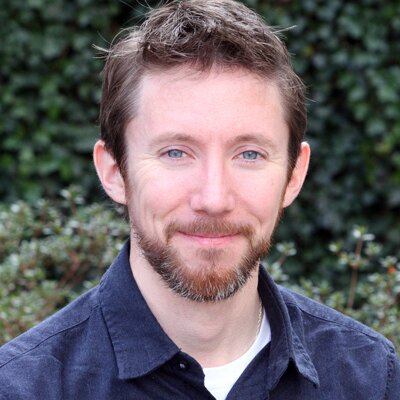
I also thank Dan and Sam for their editorial design and production magic. It's been a year we will never forget but in a small way I hope that the stories that you have heard on Wonderspace have lifted your eyes and expanded your horizons as our guests have shared their wonders of the natural world and their stories of hopefulness. We look forward to our next orbit on Monday the 6th of September, but now is the time to reset and rewonder. Thanks for listening. You