Episode #
38
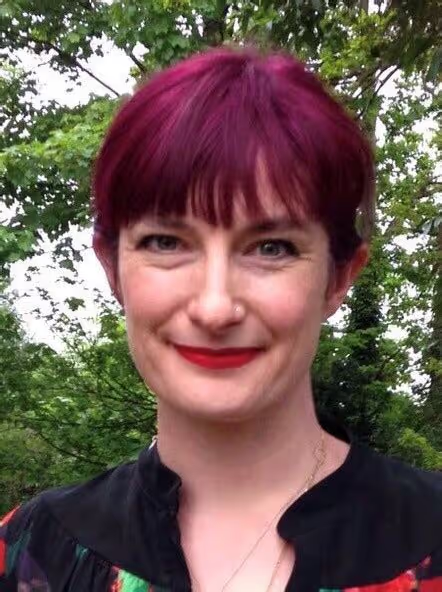
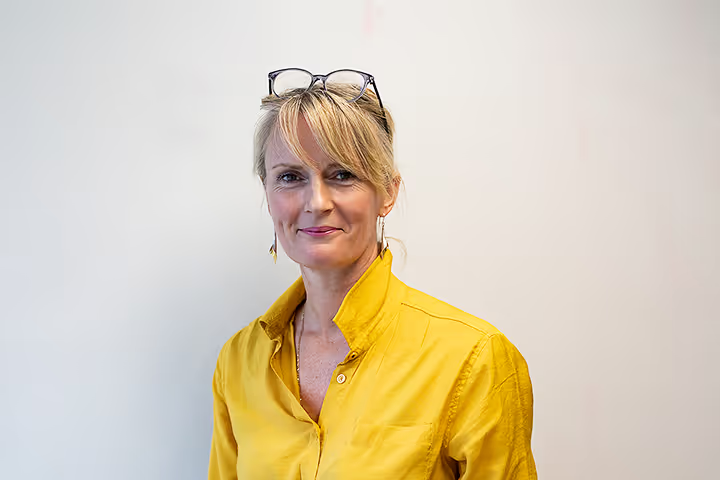
Amy Clarke
Episode Summary
Q1: Place
If we could do a flypast on any part of the world that is significant to you, which place, city or country would it be and why?
Greenaway Beach, Cornwall
Q2: Life
Give us a glimpse into your life story so far with an emphasis on what you are doing currently?
Environment, Business, Capital, Sustainability into the heart of the finance system, B-lab, Big issue Invest, Ocean Plastic Leadership network.
Q3: Reset
Where on earth is your place or reset or re-charge?
Cornwall (UK)
Q4: Wonder
What wonder of the natural world excites you the most?
A Rock Pool Eco-system
Q5: Hopefulness
What is your story of hopefulness (not your own) about a person, business or non-profit who are doing amazing things for the world?
The Honduran Human rights and Environmental Activist Berta Isabel Caceres Flores was murdered in 2016 protesting the construction of a dam on sacred indigenous land.
Q6: Insight
As we prepare to re-enter, what insight, wisdom or question would you like to share with us?
Never let fear control you

Transcript
Steve (host):
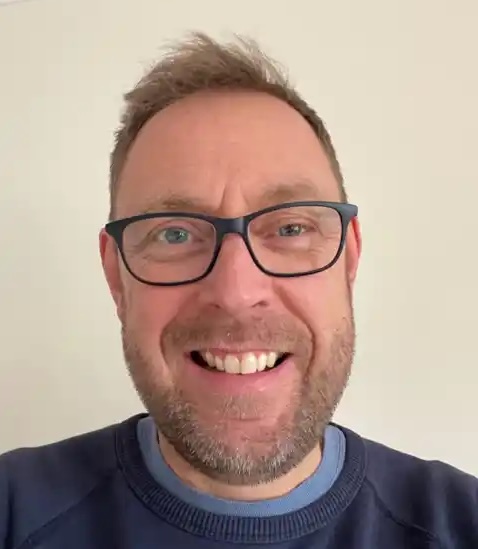
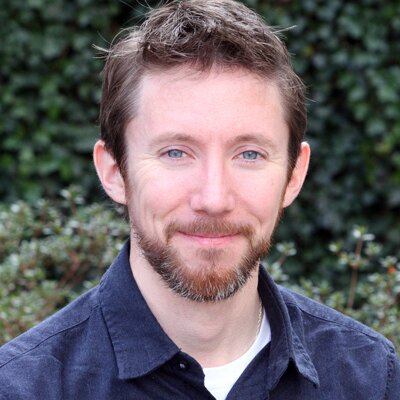
Welcome to the 38th Wonderspace Journey. It's great to have you on board. My name is Steve Cole and since September 2020 I have been asking the same 6 questions to people from around the world. The questions revolve around life and wonder, places of resets and stories of hopefulness. The setting for all of our interviews is a virtual window seat on the space station 250 miles above Earth where we see everything from a different perspective.
Steve (host):
This week our orbit will take us from Cornwall in England to the Indian Ocean and To experience these views with us in this ultimate window seat, we welcome Amy Clark. Amy is co-founder and chief impact officer of Tribe Impact Capital, which is an award-winning wealth management firm and B Corp dedicated to advising and managing private and institutional wealth for positive impact. Amy is also an advisor to the Ocean Plastics Leadership Network and is on various national and international boards which she talks about in her story. A shorter version of this episode together with footage of this journey from Cornwall in England to the Indian Ocean can be found at ourwonder.space. I start by asking Amy, from this seat 250 miles above Earth, which place, city or country would you want us to fly over and why?
Amy:
It would be a very, very specific place and it's called Greenaway Beach and it's in Trebethyric in Cornwall. And it just has such incredible memories for me, but it's where I go to completely decompress. And it links into 1 of the questions I think you're going to ask me later in terms of Natural Wonders of the World is why I go there as well. But it's a beautiful little hidden beach on a little bit of rocky headland between 2 incredible beaches, both very sandy, 1 is a very famous surf beach called Polzeth and the other 1 is quite a famous beach just because it's in the camel estuary, it's Rock Beach and this one's just tucked away but it's just it's very special.
Steve (host):
Amy give us a glimpse into your life stories so far with an emphasis on what you are doing currently.
Amy:
I'm the youngest of 3 girls I have 2 older sisters who are identical twins and before you ask Steve yes I can tell the difference between them which is the first question everybody always asks when you have siblings who are identical twins and I think I was born an environmentalist and I'm very very lucky my parents recognized it at a very early age and we were very lucky as well because we lived somewhere where we had a garden, a really nice big garden. And I used to spend hours out in the garden talking to the wildlife, building little villages in the flower beds so that all the plants and the animals could kind of, you know, commune. I was that slightly strange child. But my parents nurtured it and I've been really, really lucky because if I fast forward to what I do, I've been able to spend my entire career focusing on sustainability, what it is, how you achieve it and why it's important. I went to university, I studied undergrad and post-grad in environmentally related subjects, came straight out into the world of work at a time, I think, when people were really starting to wake up to this notion of environmental responsibility and then more broadly sustainability.
Amy:
So I have spent 27 years now working in an area that is very reflective of who I am. I don't have a job, I don't have a career, I mean obviously I have a career, I have a vocation, it's a calling, you know very much like a doctor or a teacher. I'm doing what feels natural and right for me to do. And with Tribe, which is the business that I co-founded, what we're doing is bringing sustainability right into the heart of the finance system. We're getting finance to understand what true risk looks like.
Amy:
The risk posed by not managing our resources well, by not ensuring people have equal access to education and housing and food and the water, et cetera. We're bringing that right into the heart of finance and allowing wealth holders and wealth owners to really reflect their values, their belief systems, the things that they really care about, reflect that back into their money and say, I care about these things too. And I want my money to do well for me, but I also want it to do good for other people as well. So that's what Tribe does, it's a destination for people who genuinely believe that the world should, could and can be a much better place than it currently is and they will exercise that belief through the investments that they have. I also have a few fingers in other pies as well.
Amy:
Never knowingly understocking myself with a sense of mischief and hopefully creating change elsewhere. I am so blessed. I'm really, really fortunate to have the opportunity to sit on the board of B Lab UK, part of the B Lab community and B Core community globally, obviously Tribe is a B Core. That is such a joy working with these incredible other business leaders and activists and changemakers who really believe that businesses should be and can be a force for good and helping other businesses recognize that and step up and lean in more. And then I'm also equally lucky to sit on the board of Big Issue Invest, which is part of the Big Issue Group.
Amy:
It's the impact investing, social investing arm of the Big Issue Group. And again, they're just the sheer joy and privilege of working with a team who is at the coalface of investing in solutions that tackle the root cause of poverty and homelessness in the UK. And we all know the big issue is an incredible brand and it's traveled internationally. It's wonderful. Lord Bird, John and Nigel Kershaw have done such an incredible job.
Amy:
I mean, they really, really have. So I'm in my spare time. Apparently I have spare time. In my spare time, I like to do as much as I can to help others, I think just achieve their own potential, but also help others deliver on the dreams that they've had as well. And I get to do that with my positions on the B Lab board and with Big Issue Invest as well.
Amy:
There are a few other things that I do that are probably a little bit more related to obviously my core calling which is Tribe. So I sit on the steering committee of something called the global ethical finance initiative, Jethi, which is based up in Scotland, incredible team up there. I also sit on the development council of the Future Fit Benchmark which is this incredible benchmark that helps businesses understand how they can future fit themselves for what is a constrained world that we live in. And I'm really lucky I was asked to become an advisor to the Ocean Plastic Leadership Network, OPLN, that is tackling the incredibly thorny issue of plastic in the ocean as well and through that, oh my goodness Steve, I have met just some of the most unbelievably talented, impassioned, smart, incredible people.
Steve (host):
Where on earth is your place of reset or recharge?
Amy:
So my place of reset and recharge is Cornwall in the United Kingdom in the southwest of the country. I think there are many reasons why it's my place of recharge and reset. I spent a lot of time there as a child. Incredible memories of such happy family time. I think there's also a lot of ley lines that cross Cornwall, so spiritually it's actually, it feels a very, very powerful place to be.
Amy:
And also it's the sea. I'm a salty dog. I like to have my feet or preferably my entire body in the ocean. And again, maybe that's because that's where we originally came from as a species. You know we've adapted and evolved over millions if not billions of years.
Amy:
There is something very very soothing and satisfying I think about being in salty water especially. Fresh water is it is is similar but there's something about salty water where it feels like it's actually cleansing you, really really cleansing you body and soul and mind especially. So for me whenever I can I'll be down in Cornwall in my wetsuit on a board just communing.
Steve (host):
What wonder of the natural world excites you the most?
Amy:
A rock pool, Steve. Every wonder of the natural world excites me, but there is something incredibly exciting and I think just Revealing about a rock pool. It's like a world within a world And if you get a really good deep rock pool Looking at what's in there and looking at what happens when the tide has gone out and looking at this little tiny Ecosystem that has been created It's just extraordinary. I can spend hours in rock pools, much to my godchildren's delight because they love it as well, but I can spend hours in rock pools just looking and watching and you know if they're big enough and deep enough getting in them and seeing what's in there snorkeling in them as well. It's an extraordinary little world, as I said, within a much bigger world and it just brings nature down into this little condensable ecosystem that people can understand.
Steve (host):
Amy, what is your story of hopefulness that's not your own, about a person, business or non-profit who are doing amazing things for the world.
Amy:
My story of hopefulness is a story of hope, but it's also, it's a sad story as well. And It's a shocking story. As an incredible lady called Berta Isabel Cacheres Flores, who was a Honduran activist, human rights and environmental activist, who was murdered in March 2016, protesting the construction of a dam on sacred land, indigenous land, and she represents this extraordinary community of individuals around the world, a lot of them are female, who put themselves in harm's way in the defence of what's right. In 2019 there were 212 activists killed around the world according to Global Witness. So whilst it's an incredibly shocking story and it's a shocking statistic, People like Bertha represent to me the best of humanity, people who are willing to put themselves in harm's way to do what's right.
Amy:
I could also talk about the RNLI, the Royal National Lifeboat Institution, completely different, completely different story. But again, here in the RNLI, you have an institution that is publicly funded by the Great British public. It's run on donations, and you have people around the UK who will put themselves in harm's way to help other people. They're not paid to do this, they volunteer to do this. And it's that mindset, it's that recognition that what's right to do is right to do, and to have the courage and the conviction to put yourself out there and say, no, I will help.
Amy:
I will make a point. I will take a stand. I will get on that boat in the gale and I will go and help that person. It's an extraordinary mindset and to me that's the hope. There are millions of people around the world who have that mindset and the more that we can get people comfortable with being uncomfortable, I think the better this planet becomes, the better society becomes.
Amy:
So I think there's a huge debt of gratitude we owe people like Bertha and all of the activists who've been murdered around the world and there's a huge debt of gratitude we owe people like the RNLI, you know, as an example of an organization that puts themselves in harm's way to help people but within that there's just such hope such incredible hope for humanity.
Steve (host):
Finally as we prepare to re-enter what insight wisdom or question would you like to share with us?
Amy:
I think that insight I'd like to share with you is that at any 1 time in our lives we are as human beings we are paralyzed by a sense of fear about something And altogether too many of us give that fear a voice and a vote. It's really good to give your fear a voice, to sit with it, to listen to it, to understand it, to interrogate it, to then recognize What strength of reaction do you need to that? What is the reaction to whatever it is that is creating that fear? But too many of us don't sit with the fear, don't listen to it, don't interrogate it. We jump to giving it a voice and therefore not acting or acting in a way that ultimately is self-sabotaging or self-harming, or harms others.
Amy:
So my insight and my wisdom would be we've all got to get a lot more comfortable with fear. It's part and parcel of life, it's part and parcel of being human. Life can be brutal. We have to get comfortable with our fear, we need to respect it but we should never let it control us.
Steve (host):
To find out more about Tribe go to tribeimpactcapital.com Amy also passionately talked about organisations such as B-Lab, Big Issue Invest, the FutureFit Benchmark, the Global Ethical Finance Initiative and the Ocean Plastics Leadership Network. In her story of hopefulness, Amy spoke about the Honduran activist whose work and legacy continues and you can find out more at COPINH.org. To listen to the previous 37 Wonderspace interviews the website is ourwonder.space I want to thank Amy for joining us on this Wonderspace and I hope you can join us next week for more wonders and stories of hopefulness.