Episode #
37
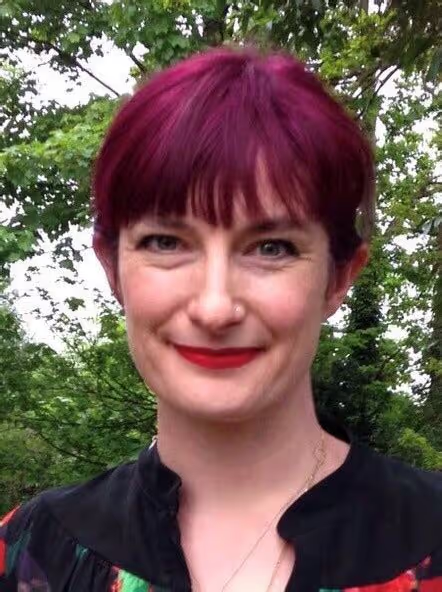
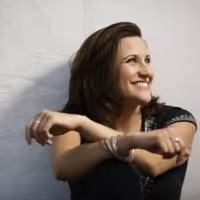
Hazel Thompson
Episode Summary
Q1: Place
If we could do a flypast on any part of the world that is significant to you, which place, city or country would it be and why?
Kamathipura (The red light district in Mumbai)
Q2: Life
Give us a glimpse into your life story so far with an emphasis on what you are doing currently?
Nomadic storyteller with a heart for justice, Croydon Advertiser newspaper, New York Times, Investigating modern day slavery and trafficking. Beyond the story podcast, Stories for change.
Q3: Reset
Where on earth is your place or reset or re-charge?
Music and a friends home in Sweden
Q4: Wonder
What wonder of the natural world excites you the most?
Under the night skies in Africa and the Saudi desert.
Q5: Hopefulness
What is your story of hopefulness (not your own) about a person, business or non-profit who are doing amazing things for the world?
A family born in a brothel in Mumbai broke the cycle of trafficking and now working with an NGO rescuing and supporting girls. Women for Women International UK help rebuild lives and communities after a war over the long term.
Q6: Insight
As we prepare to re-enter, what insight, wisdom or question would you like to share with us?
I can make that pain break me, or I could let it make me. I know that's what other people's stories did for my story and I hope the stories that I tell help bring hope and transformation to other people's lives too.


Transcript
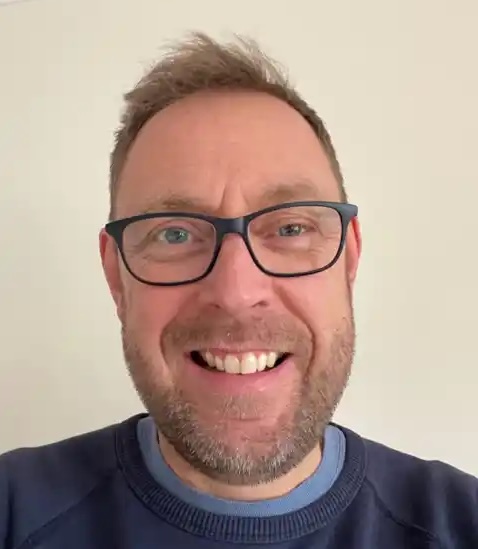
Steve (host):
Welcome to the 37th Wonderspace Journey. It's great to have you on board. My name is Steve Cole and since September 2020 I have been asking the same 6 questions to people from around the world. The questions revolve around life and wonder, places of reset and stories of hopefulness. The setting for all of our interviews is a virtual window seat on the space station 250 miles above Earth where we see everything from a different perspective.
Steve (host):
This week our orbit will take us over cities such as Bangalore in India and Dhaka in Bangladesh and to experience these views with us in this ultimate window seat we welcome award-winning photojournalist Hazel Thompson. Hazel has taken up assignments in over 60 countries for media organizations NGOs and international companies. Since 2002 Hazel has also invested much of her life into documenting the disturbing truth around India's subculture of sex trafficking. Hazel also works with Stories for Change who have captured the stories of people who have experienced homelessness in the UK. A shorter version of this episode together with footage of this journey from India to China can be found at ourwonder.space.
Steve (host):
I start by asking Hazel, from this window seat 250 miles above earth which place city or country would you want us to fly over and why?
Hazel:
So for me a significant place would be to look down on Kamathipura in Mumbai, India. And I'd love to see it firstly from a space perspective. Kamathipura is the red light district of Mumbai. It's 1 of the largest red light districts in the world actually, but in Asia. And this is a place that I've left part of my heart and is a place I would call home as well, which doesn't really make sense because my life is so different from life in Kamathipura.
Hazel:
But Kamathipura, I spent 11 years since 2002 going there and documenting the Red Light District and the realities of life in the Red Light District and the lives of the women and children who live there. And I tracked some girls' lives for over 11 years and then actually spent then another year putting a book together. So for 12 years of my life, Kamathi Pura was very much part of my life and still is, it's still very much in my heart but I say I've left a bit of my heart there And it's a very special place to me. I have friends there who I do regard as family. And the girls.
Hazel:
From here in the space station, all I can think about is the girls whose lives I walked alongside for many years. And the girls still trapped there. I think about them often because there's girls I care about deeply who are trapped who were trafficked into the red light district so that would be a very special place at which I'm extremely connected to.
Steve (host):
Hazel give us a glimpse into your life story so far, with an emphasis on what you're doing currently.
Hazel:
So, I grew up in a small village. I grew up, I was a very free and curious child who loves stories and just was curious about everything and asked questions about everything. And I was a creative, I fell in love with photography when I was studying art for my GCSEs. I photographed things for my preliminary studies and literally had a love affair with a camera and started photographing everything and I've ever since had a camera on my shoulder and I've been telling stories. Now I'm a filmmaker as well and but I now describe myself as a nomadic storyteller with a heart for justice.
Hazel:
But it very much came out of who I was as a child. I got work experience when I was leaving school at a local newspaper, this newspaper called The Croydon Advertiser in the south of London. Incredible space to learn in. I got to learn, really, you know, grass roots of journalism there. It had some good stories, but it had some hard news stories, to fluffy stories, but that's where I learned.
Hazel:
And then I got mentored by a well-known photojournalist called John Downing, who covered every war since Vietnam. And he took me under his wing. And he really opened up the doors to the Nationals. And then I started a few years later working for the Internationals. And I've been very lucky.
Hazel:
I've got to work for my dream publications, and I still work as a freelancer, a contractor for the New York Times and The Guardian, Stern magazine. I've got to produce short documentaries for Channel 4 News, And my passion is very much to seek the truth. I do investigations and to tell stories. And I have a real passion for telling stories and investigating modern slavery and trafficking. And I've been doing that since 2002.
Hazel:
And I now work for multiple organizations. So I work alongside NGOs, worked on some amazing campaigns going to the UN, work with also amazing companies. I do commercial work and Travel stories that allow me to pay for the kind of projects that I want to do in personal projects Currently what I've been working on I'm working on a couple of stories because I've been UK bound. I'm doing a investigation story looking into trafficking and slavery in the UK at the moment and working also in the US on a story, which hopefully I'll be going out to do in September when I can travel. I actually, out of the lockdown, have been developing my own podcast series called Beyond the Story, where I have gone back and been interviewing the incredible individuals, the unknown heroes who I've met over the last 20 years, stories that I maybe didn't get to tell at the time.
Hazel:
And for the last couple of years, been working with an incredible team called Stories for Change. And we've been doing a series looking at homelessness in the UK. And really trying to break the stigma and myths of homelessness and allowing people to share their stories. It's just raw, honest stories. And that's been, from travelling around the world to really see what's happening in the UK closer up, has been an incredible thing.
Steve (host):
Where on earth is your place of reset or recharge?
Hazel:
So I have a couple of places of reset because I think reset should be done in a rhythm, a rhythm on a daily basis and then a rhythm of getting away as well to retreat. I think it's really important. So my daily reset would be, I would say music. Music for me is a second love in my life. I have songs when I go abroad which become theme tunes that I listen to when I wake up at the start of each day or when I'm finding something hard, for me to just come back into myself and I get to a place of just deep connection when I listen to music.
Hazel:
But also I would say a very happy place for me where I found immense joy, which I forgot about actually. It was a treasure I lost in my life for a short while. It's just singing with other people, with a guitar, preferably round a fire or just in a front room after a wonderful dinner with friends. And it's funny, I lost that for a while and then I actually went away to do a writing retreat in America for 3 months and I had a flare-up of PTSD because often actually when you stop your body starts to heal itself. And there were some local musicians who actually worked at the residency, it was a journalism residency, who were not in my style of music, it was kind of country music, but I asked for a guitar in between writing and I started to play the guitar again and sing and they actually even let me come and join them and sing in their band.
Hazel:
And that brought such joy back to me and reminded me the importance of not only listening to music, which you can easily consume, but actually just creating and how life-giving that is. So that's a place of short-term reset, which is very important to me. And then longer-term reset on the recharge. A place for me, and looking from above actually is a country but what it signifies is Sweden. And that's because there I have very close friends, family friends, their family to me and it's been a place that has been a safe haven to me and a harbour that between hard assignments they have taken me in, I've gone to their summer house, I've spent Christmases, and Swedish Christmases are wonderful.
Hazel:
Many times having fika, which is afternoon coffee and cake, deep conversations, a lot of music, and swimming. I love wild swimming. The Swedes love to sauna and then jump into a cold sea and I have very special moments of recharge there. But what I love is I just know wherever I'm at or if I'm really tired I know it's a safe harbour I can go sailing and I can just turn up and be there and that's what I love. I think we all need a safe harbour that we can go to when we're tired and worn out
Steve (host):
What wonder of the natural world excites you the most?
Hazel:
I find this 1 hard to answer because I am a person that likes to enjoy the wonders of this world. And especially with the delights of travel, there are many places that have left me in wonder. But I really thought about this. What are something that I go back to again and again? Firstly, the night sky.
Hazel:
I have had incredible experiences under the skies of Africa, the Middle East, where the stars have brought incredible comfort to me. And I'd even say as a child, I had a thing I used to do as a child. In the summertime, actually even in the winter, I used to sneak out my house and lay on the lawn in a sleeping bag to just look at the stars when I was a little girl. So this has been something of wonder that's always been in me. But when I've traveled, I've got real significant moments where I think of, you know, a few years ago I was in the Congo in DRC.
Hazel:
I was in a place with no electricity or water, there was no light pollution. And I was sitting around a fire with the elders in a village that only 6 months before had been attacked, people killed. They had suffered a lot of loss, a lot of pain. They'd lost their own children. I was sitting with these elders from different villages and they actually didn't know each other.
Hazel:
And we sat under this night sky, which was 1 of the most beautiful skies I've ever seen. And there was such hope and I've been to DRC a few times. And this trip was quite healing because the last time I was there, I had been covering rape as a weapon of war. And, you know, to go back, it's hard to hear those stories and to see the pain that people have gone through. And I sat around this fire under this sky and you could literally see lightning in the background.
Hazel:
You could hear these birds that sound prehistoric. It is a beautiful place. And the elders started singing in a mix of Swahili and the local language, singing in perfect harmony. And I still have this on my phone and I play it regularly and it was just the unity and the hope again in this raw music under this night sky and yeah a memory of being at the edge of the Saudi desert with these doctors from Syria talking about their future. And this was a few years ago.
Hazel:
And then I realized when I remember in lockdown, I was sitting under the night sky and I suddenly remembered those doctors again thinking they're probably right in Syria now. I don't know if they'll all still be alive. It's just these moments under these skies with total strangers, you connect under that wondrous beauty. And I think the sky is such wonder, there's so much we don't know about space it makes me realize how small we are but also that in such darkness light travels so far and I think that is what brings me such hope.
Steve (host):
Hazel what is your story of hopefulness that's not your own? About a person, business or non-profit who are doing amazing things for the world?
Hazel:
So my story of hopefulness would be an organisation and a family who have really made an impact on me. And the family I can't name, they are unnamed heroes, but this is a family that I've known since 2002. 1 of the sons was my main fixer, who basically was my protection, my translator. We did everything together in the red light district in Mumbai. And this family of 5 generations of traffickers, the first relative was trafficked into Kamathipura and then became a madam and then generation after generation the family carried on.
Hazel:
And this particular family, the mother was a temple prostitute and the sons all ended up in gangs and they were all born in the brothel and lived in the red light. They had no education, they couldn't read or write and they basically had a transformational experience, broke the cycle of trafficking and then became a family that started working for a local NGO and rescuing girls and I met them Nearly 20 years ago and they inspire me 1 for this complete sacrifice because to be in a gang and then come out of gangs and then be rescuing the girls doesn't make gangs happy, the risks that they take on a daily basis, but it's the love that they have for their people. In India, if you're a child of a prostitute, you really don't have a future. You're not regarded as valuable. And I've known this family for 20 years and they continue to work in the red light tirelessly.
Hazel:
1 of the brothers has taught himself to read and write. He's gone to America and got a scholarship. And you know, he could have never imagined this boy who couldn't read or write in America studying. And the family is still there. The family is still tirelessly working during the pandemic.
Hazel:
When the lockdowns happened, the women and children living in the red light were starving because there was no work and they were there giving, they were raising money, feeding thousands inside Kamathipura and around Mumbai. And it's this family that inspire me and remind me that anything is possible if you just believe. And it's just about loving people well. And it's also not about a big shiny organization. It's just a family going out there and making a difference to the area they grew up in and loving people really well.
Hazel:
And then an organization I'd like to name who've inspired me would be a charity called Women for Women International UK. And I love what they do. Because, you know, as a news person, you go into a war zone. And, you know, war when it's happening is very much in our hearts, in our minds, people respond. But often people don't know what's happening 5 years later, 10 years later, and it takes generations to rebuild a country after a war.
Hazel:
And I love this organisation because they go back in and they help the women rebuild their lives. They train them, they find the ones that have the least, the ones who are widowed, the ones who are really struggling and literally help rebuild nations, war-torn nations through the lives of the women. And that inspires me because it's long-term hard work and working with them as an organisation has been quite life changing in hearing the stories of the women they work with.
Steve (host):
Finally as we prepare to re-enter, what insight, wisdom or question would you like to share with us?
Hazel:
The insight I'd like to share with you is that there is a transformational power within pain and I think As someone who's had the privilege to walk alongside people in great tragedy, in great loss, from being in war zones to women who've been trafficked, held captive, I've seen something in humans who've gone through much tragedy or much pain. I've seen a resilience and a strength that is quite extraordinary. And these people have inspired me hugely. When I was in lockdown, I lost 4 friends. 1, I lost my mentor in lockdown, who actually died of cancer, but who'd been like a father to me.
Hazel:
And I remember sitting in my garden alone, finding it hard to grieve alone, feeling the loss. And I knew I had a choice to walk away from the pain or push into it. And to push into the pain, I was reminded in that stillness of all the people I've met. The people who've overcome far worse tragedy, who've overcome losing everything, refugees, you know, just immense things you can't even imagine, girls that have been held in cages for 5 years because they were trafficked and they're only used or only touched to service men. And I thought about that, and I've seen how the people that inspire me most are those who've then taken that pain and that tragedy, and they've faced it, And they've allowed it to transform into something beautiful.
Hazel:
And I realized even in my own life, that's what happened to me. In my 20s, I ended up in a marriage where I ended up in a domestic abusive situation. And I had to escape my situation by going to a safe house and face the failure of a marriage and many people at the time had no idea because they thought I'm this journalist you don't look like a victim and in my moment in my darkest hour when I felt like giving up and I thought I have failed and I was scared to love again, I was scared. I didn't know if I could even keep doing what I was doing as a photojournalist. I felt so destroyed.
Hazel:
I remembered the people I had met and who had inspired me and I realised I had a choice. So I could make that pain break me or I could let it make me because I know that's what other people's stories did for my story and I hope the stories that I tell are helping bring hope and transform other people's lives too.
Steve (host):
To find out more about Hazel and to see some of her photography go to hazeltompson.com Hazel talked about capturing the stories of people who have experienced homelessness in the UK and you can find out more at storiesforchange.org.uk In her story of hopefulness Hazel talked about Women for Women International and you can find out more at womenforwomen.org.uk To listen to the previous 36 Wonderspace interviews, the website is ourwonder.space. I want to thank Hazel for joining us on this Wonderspace and I hope
Hazel:
you