Episode #
32
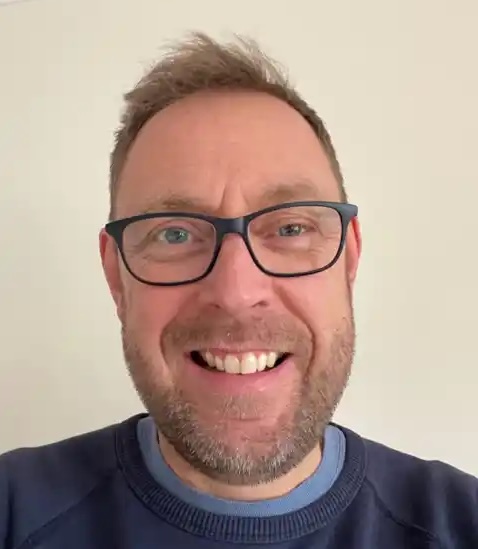
James Arbib
Episode Summary
Q1: Place
If we could do a flypast on any part of the world that is significant to you, which place, city or country would it be and why?
Mesopotamia
Q2: Life
Give us a glimpse into your life story so far with an emphasis on what you are doing currently?
History at University, environmental activism around finance, Founded Re-think X and wrote the book Rethinking Humanity as a hopeful analysis as to how we might solve most of the problems of climate change.
Q3: Reset
Where on earth is your place or reset or re-charge?
Georgian Bay in Canada
Q4: Wonder
What wonder of the natural world excites you the most?
Mycelium networks
Q5: Hopefulness
What is your story of hopefulness (not your own) about a person, business or non-profit who are doing amazing things for the world?
Biotechnology and its potential to change the world. Hacking biology to produce the things we need particularly food and materials. Building and designing food from a single molecule and cell with almost perfect efficiency and therefore reducing the cost to consumers and to the planet.
Q6: Insight
As we prepare to re-enter, what insight, wisdom or question would you like to share with us?
We need to add the paradigm of biology to a paradigm of physics and understand the interconnections, the interactions between the pieces which we've lost,

Transcript
Steve (host):
Welcome to the 32nd Wonderspace Journey. It's great to have you on board. My name is Steve Cole and since September 2020 I have been asking the same 6 questions to people from around the world. The questions revolve around life and wonder, places of reset and stories of hopefulness. The setting for all of our interviews is a virtual window seat on the space station, 250 miles above Earth, where we see everything from a different perspective.
Steve (host):
This week our orbit will take us from Alaska to the Gulf of Mexico and to experience these views with us in this ultimate window seat, we welcome James Arbib who is the co-founder of a think tank called Rethink X. They analyse and forecast the scope, speed and scale of tech-driven disruption and its implications across society. As you will hear in this episode, the team at Rethinker X suggests that we are on the cusp of the fastest, deepest and most consequential transformation of human civilization in history. A shorter version of this episode together with footage of this journey from Alaska to the Gulf of Mexico can be found at ourwonder.space. I start by asking James from this window seat 250 miles above Earth, which place, city or country would you want us to fly over and why?
James:
Well, I mean, there are so many choices there, but I think for the fly-by, I would love to go to Mesopotamia. I've always had this kind of incredible fascination with history. And Sumer and Uruk, the world's, I guess, the first city in history, has always just kind of held a fascination for me. I mean, it's where writing was invented, where the wheel was invented, where irrigation and the plow, and I mean, just an incredibly creative, inventive place and era back then. It's also a kind of lesson as well, because now it's desert.
James:
I mean, we go there today, we'll see a few kind of relics, but basically desert for miles around. Because of course they kind of over exploited their landscape. And it's just 1 of those places I've never been to that part of the world. And it's just, I've always felt when I've visited Egypt or Rome, you can just feel the energy of history kind of seeping into your body. And I think to go to Yoruk, which was really the birthplace of civilization in many ways, would just be an extraordinary experience.
Steve (host):
James, give us a glimpse into your life story so far with an emphasis on what you are doing currently.
James:
A glimpse into my life story so far? Well, I mean, I guess in many ways I'd describe it as something of a random walk. I mean, I'll go back, I guess, to university as a starting point where I studied history. And that was a kind of fascination for me. And it's kind of stayed with me ever since.
James:
But I stumbled out of Cambridge nearly 30 years ago now and fell into finance, as a lot of people did back then for lack of career planning and for the fact that they paid the best salaries. So I ended up there, hated it, but stayed with it and eventually made my way through various changes to venture capital, particularly clean technology venture capital. And my involvement there created a real interest in environmental issues. And I began to get involved with a lot of environmental activism, but quite techy environmental activism around kind of finance, how we could move flows of capital from the bad stuff into the good stuff, as it were. But I began to get increasingly disenchanted with the environmental narrative, the doom and gloom that was in the story we told about the environment.
James:
Because what I was seeing in technology was this extraordinary improvement in the cost of solar and batteries and so on and so forth. It seemed within a few years, they'd begin to outcompete the old stuff. Actually, we would largely decarbonize the economy, really because of better and cheaper technology, rather than because we decided to give up consumption or because governments decided to kind of tax and regulate us to get there. And anyway, as part of my journey in environmentalism and environmental technology, I ended up out in the US where I met my co-founder, Tony Sieber, my co-founder of Rethink X. We both got invited along by the US military to a kind of scenario planning exercise they were running.
James:
And they were asking the question, what happens if we get off fossil fuels very quickly? What will that mean for geopolitics? And I'll never forget being in this room with 10 invited experts from these kind of very august big institutions. I'm not sure I'm supposed to name them, so I won't, but they were oil companies and consultants and departments of government and so on. All of these guys had identical forecasts for the adoption of solar and the adoption of electric vehicles, these kind of low linear forecasts out to 2040, 2050 even.
James:
And Tony got up halfway through when it was his turn to speak and said, look, that's not how disruption works. It's not a kind of slow incremental progression. It's nonlinear and it's an S curve. And these things are over by the 2030s. And if you're going to make your plans based on these kind of faulty forecasts, you're going to make some major mistakes.
James:
And I absolutely agreed with him, said pretty much the same thing. And anyway, we went out for coffee afters, and we talked about health care and farming and food production and finance, pretty much every sector of the economy, and how we saw these disruptions coming. But no 1 else seemed to, and no 1 understood how quickly they might come and how profoundly they were going to affect society. And we ended up after kind of months of talking on the phone between London and San Francisco, deciding that we really had no choice but to set up a think tank, to kind of do it better, to provide better forecasts for decision makers across society, to make better decisions. I mean, that was our kind of founding statement.
James:
We've published a few reports on disruption at a sector level. And then last summer, we published a book called Rethinking Humanity, which was really looking at, you know, these disruptions together and what they might mean for society as a whole, how we might fundamentally have to change all kinds of aspects of society that we're not even thinking about. But it's a hopeful analysis in many ways about how we might solve most of the problems that we face today. We have a whole different set of problems but the problems we have today are yesterday's problems. They're the problems of a system that we're leaving behind and you know we spend all our life and all our time trying to patch up that old system and very little of our time, effort and resources trying to enable this new system to emerge.
James:
Where
Steve (host):
on earth is your place of reset or recharge?
James:
My favorite place to reset is out in Canada. My wife's Canadian and she owns a cabin up right at the north of Lake Huron, a place called Georgian Bay. And I mean, it's the most beautiful place on Earth, really. It's a part of the lake where the shoreline's fractured, so there are thousands and thousands of islands. And it's kind of bare rock with a few trees on top, and it's completely unspoiled.
James:
And we have a cabin on 1 of the islands up there, and we disappear there every summer. And it's just a very, very simple life. I mean, they actually now have phone masts up there, which is kind of disappointing. But, you know, by sort of the time people wake up, it's just too blocked to even bother trying to use. So you have to kind of set aside all your electronic equipment and actually just, you know, relax into it.
James:
And it's the most extraordinary place. And that's why I do a lot of my writing and a lot of my thinking. And yeah, I come back every year just totally re-energized and ready to go.
Steve (host):
What wonder of the natural world excites you the most?
James:
So the wonder of the natural world that excites me the most at the moment are mycelium networks. And by that I mean the kind of whole body of which the mushroom is essentially the flowering part. And it's an area that I've only kind of recently, well, discovered in depth and is a source of endless fascination. Now I sound a bit geeky saying that, and that's, well, that's partly because I am a geek, but secondly, because I've just started reading and exploring, And they seem to answer so many of the questions that I have in all kinds of ways, at all kinds of levels. But in our work, we've been looking at how society might be kind of on the cusp of a kind of major restructuring around a production system that's much more kind of distributed and localized.
James:
And mycelium network in some ways seem to be the model in the way in which they exchange information and materials over a whole network, a whole expanse. They're essentially a bunch of interconnected nodes, which is kind of how we see the emerging economy. And so I've kind of had these ideas of biomimicry for governance and biomimicry for economics and so on running around my head is that in some ways we kind of need to mimic nature because nature is ultimately kind of distributed and connected. So I think actually for me right now that's an area of immense fascination. It's a part of nature that I've never really understood or explored, other than kind of enjoyed mushrooms occasionally.
James:
It's a whole depth there that I had never realized existed.
Steve (host):
James, what is your story of hopefulness that's not your own, about a person, business or nonprofit who are doing amazing things for the world.
James:
My story of hopefulness is around biotechnology. I mean, it's an area that I think is just gonna transform the world. It involves countless individuals and businesses who are just learning ways essentially to hack biology in all kinds of different ways to produce the things we need. So what we see is a kind of combination of information technology and biotechnologies coming together in such a way that we can not just decode nature, but actually begin to design all kinds of things, particularly food and materials, which we can use in all kinds of ways. And it's going to transform the world.
James:
It's going to solve all kinds of problems that we have today that come with our current ways of growing food, the soil depletion, the greenhouse gas emissions, the runoff, the effluent, the pollution, the deforestation, all of these things that deplete our world right now can be solved as we learn to produce food and materials without having to extract them from animals or from mines. And it's going to transform actually our whole system of production to 1 where we're extracting scarce materials, to 1 where we're kind of building them up from the single molecule or the single cell with almost perfect efficiency. I mean, of course, not perfect, but with vast improvements in efficiency. So it will lead to kind of lower cost food and materials, but also vastly lower cost to our planet, vastly less impactful. And some of the breakthroughs are just extraordinary, both in terms of the cost, but in terms of what we can produce and how quickly.
James:
So we're seeing people making leather, for instance, unconstrained by the evolution of a cow. So you can now produce leather of any kind of size or any thickness or almost any properties. You can produce foods of all types that you can't even imagine. And It's an extraordinary thing because our current systems are just completely unsustainable. There's no way we could feed the world anything that looks like an affluent diet through the old extraction-based model, through the old livestock farming model, because no matter how well we do, we just don't have enough.
James:
There's just not enough land. There's just not enough resource to feed well. But this way, We can produce food at a fraction of the cost, with benefits across the board, benefits in terms of health and environmental impact and cost and food security and all kinds of things. That whole space is 1 that just holds endless fascination for me. And some of the kind of the front runners, the Impossible Foods and the Clara Foods, I mean, there are so many different business operating in this space.
James:
It's actually, we wrote a report about this, 2 years ago now. And the space has just moved so fast in terms of the amount of investment that's flying in, the products that they're managing to develop. We're seeing, you know, companies produce, you know, milk and ice cream. And actually, we're beginning to see things like steak, much more complex problems, more complex structures. So, I mean, it's just a really exciting place.
James:
And in a decade or so, you know, we might just see the end of animal agriculture, right? We won't be eating. And we see the end as well of fishing, essentially, of overfishing, certainly. I mean, we won't be depleting our oceans anymore. And actually, what's interesting is, once you get an alternative that is lower cost and beneficial in all these respects, which we've never had, I mean, as much as we might think veganism or, you know, other lifestyle changes are a solution to some of these problems, you know, they're not ones we can ever force through.
James:
And we're never going to change people's behavior enough to solve these problems. But, you know, we can produce, you know, things that replicate everything we have today or actually improve on them. And once you've got a lower cost, more secure, more resilient, better on every parameter alternative, I think governments will move very quickly and we might see our oceans regenerate, we might see all kinds of, you know, the land regenerated, our ecosystems restored. I mean, it's just extraordinary what can happen with just a few technologies in 1 small space will just transform all of the Earth's systems essentially.
Steve (host):
Finally, as we prepare to re-enter, what insight, wisdom, or question would you like to share with us?
James:
Well, there are plenty of them. And I'm going to start with perception or thinking, because 1 of the biggest challenges that I think we face is a problem of perception. So we live in a world that a society really evolved kind of through the industrial revolution, through the enlightenment and the scientific revolution. And we still have a lot of the systems and the ways of thinking that emerged then. And by that I mean the way we tend to perceive what is an incredibly complex world, the way we interpret it or the way we make it intelligible is to break it down into small pieces.
James:
Our Western mind is incredibly good at understanding, you know, the individual parts of the whole. So we, you know, we understand the functioning of the world down to the subatomic scale. And it's been extraordinary. And that kind of reductionism, you know, kind of ripples across every other part of society and where we organize ourselves. So we see governments, you know, organized into different departments, you know, separated by activity or academia divided up into different subjects.
James:
We also see it, you know, manifesting itself in our kind of belief in individual rights, which forms a bedrock of democracy, free market capitalism, our social contract where we trade our own individual labor for capital and so on. And so that kind of reductionism is really at the center of our industrial system. And this is, I guess, really why we kind of set up We Think X in the first place, is that we need to rebuild that. We don't need to dispose of it. I think it's all incredibly valuable knowledge.
James:
In some ways it's a paradigm of physics and we need to add to it the paradigm of biology. And by that I mean understanding the interconnections, the interactions between the pieces which we've lost, which we just don't see. And I think those societies and those businesses and those individuals who can do that, who can take a much more holistic viewpoint on the whole, will do far better as we go forward. And so the challenge for all of us and the challenge for me particularly is to kind of unlearn what we think we knew because, you know, when systems change, everything changes. And in some ways, the kind of the greater and deeper your expertise of the old system, you know, the more you have to unlearn.
James:
And that's a challenge I'm confronting daily to unlearn what I thought I knew and try to relearn. But it's a challenge. I mean, it's going to be an extraordinary thing to embrace as we go forward and something I'm you know I'm devoting my life to in many ways.
Steve (host):
To find out more about Rethink X and to download their free book called Rethinking Humanity go to RethinkX.com. To listen to the previous 31 Wonderspace interviews the website is ourwonder.space. I want to thank James for joining us on this Wonderspace and I hope you can join us next week for more wonders and stories of hopefulness.