Episode #
17
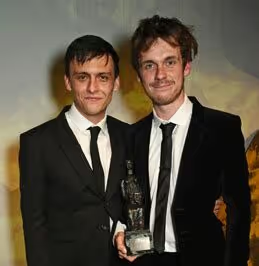
Joe Murphy + Joe Robertson
Episode Summary
Q1: Place
If we could do a flypast on any part of the world that is significant to you, which place, city or country would it be and why?
Lindisfarne and Tokyo
Q2: Life
Give us a glimpse into your life story so far with an emphasis on what you are doing currently?
Shakespeare in Tokyo. Built the Good Chance dome theatre on the refugee camp in Calais and Paris which was the catalyst to an award-winning play called The Jungle and The Walk with Amal from Syria to Manchester.
Q3: Reset
Where on earth is your place or reset or re-charge?
A Cottage in Hampshire and Whitby
Q4: Wonder
What wonder of the natural world excites you the most?
The Aurora Borealis and Port Meadow in Oxford
Q5: Hopefulness
What is your story of hopefulness (not your own) about a person, business or non-profit who are doing amazing things for the world?
Countries working collaboratively to address climate change and the founder of virtual reality Jaron Lanier.
Q6: Insight
As we prepare to re-enter, what insight, wisdom or question would you like to share with us?
The power of humility and the challenges and insights of living with epilepsy.

Transcript
Steve (host):
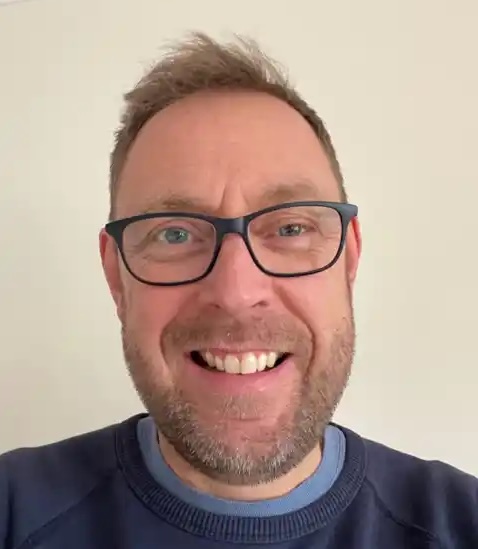
Welcome to the 17th Wonderspace. It's great to have you on board especially if this is your first Wonderspace orbit. My name is Steve Cole and since September 2020 I've been asking the same 6 questions to people from around the world. The questions revolve around life and wonder, places of reset and stories of hopefulness which I think we need more than ever. The setting for all of our interviews is a virtual window seat on the space station 250 miles above earth where we see everything from a different perspective.
Steve (host):
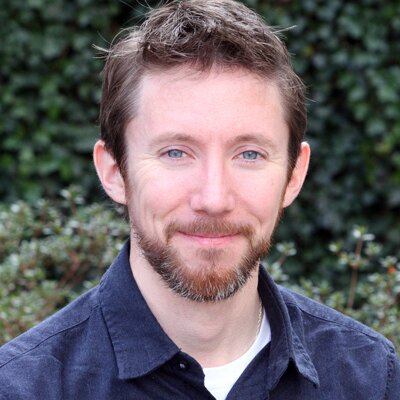
This week our journey takes us from the UK to the borders of Turkey and Syria and sharing these views with us from this ultimate window seat we welcome Joe Murphy and Joe Robertson who are actors and playwrights and the founders of good chance. I first met Joe and Joe 5 years ago on their refugee camp in Calais in northern France and I think what they and their team have created and developed since then is truly remarkable. A shorter version of this episode together with footage of this journey to Syria can be found on our website ourwonder.space where you will also find the previous 16 episodes. I start by asking Joe and Jo, from this seat 250 miles above Earth, which city or country would you want us to fly over and why? The first person to speak is Joe Murphy.
Joe Murphy:
I've stayed quite close to home for this 1. It felt right for whatever reason and I went a little bit further back into my childhood and I went to Holy Island, to Lindisfarne, just off the coast of Newcastle, and to a school visit that I had when I was just going into lower sixth. And at certain times you can walk to this island, but at other times you have to take a boat. And I think it was the place that I first realised that I believe in something more than what I can see. I believed in ghosts when I went there for the first time.
Joe Murphy:
Partly due to Father Richard, who was a very naughty priest and a very brilliant, brilliant priest who never felt entirely like a Catholic all to his credit. But yeah, I would fly over Lindisfarne and see what's going on there.
Joe Robertson:
How wonderful. I've gone much farther than you, Joe, but strangely closer to you. If we're here over the earth, I'd love to go to Tokyo I'd love to see Tokyo from this stratosphere Which was where we sort of met right? We we were at university together and we were in a play together, a Shakespeare play that toured to Tokyo and that's where we met and sort of had this crazy beautiful wonderful summer together and performed the taming of the Shrew at the Metropolitan Theatre in Tokyo and then at Saitama and had just this wonderful experience with these amazing Japanese audiences who knew the play far better than we did, and we explored and sort of got to know this whole new place and each other, and then after that we wrote our first play together, so I was thinking that would be a lovely place to hover over.
Joe Murphy:
I'd also like to draw attention Steve to the fact that I played his servant in that play and have done so ever since.
Joe Robertson:
Well Of course, of course. I was Lucentio and he helps me with my bags.
Steve (host):
Please give us a glimpse into your life story so far with an emphasis on what you are doing currently.
Joe Murphy:
Joe and I met at university as Joe said, me playing his servant. And after that, we moved to London and tried to learn to write. But it was really an experience abroad in a very strange place that brought us close together. And I think probably made us realise what was happening in the world for the very first time, which was when Joe and I went to Calais, to the jungle. Which I don't think we understood in any way at the time.
Joe Murphy:
We had no real contact with people who'd been forced to migrate before and I think we were imagining that we were stepping into some sort of exceptional moment, a moment that was unusual. Since then it's become very clear that Migration and forced migration is not unusual, not exceptional. But back then it seemed to be the case. And we arrived in this place, the jungle, of 10, 000 people from 25 different places, many, many different languages, cultures, traditions. This, I'm hesitant to say a melting pot, it was called the jungle.
Joe Murphy:
It was a jungle, that's the most accurate way of describing it. And people were struggling for food, for shelter, for warmth, Christmas and the coldness of that time of the year was coming. And we decided that it would be a good thing to build a space for lots of people to be together. And that was the idea initially and that was all it was, we'd just build a space. And once we'd built it with lots of people, and my god, that day was amazing, when together with people from so many different countries, we built a building together, and it got up, and the roof got over, and we all decided that it made sense to call it a theatre.
Joe Murphy:
And we programmed it for 7 months together. We saw plays from Iran, we saw dances from Eritrea, we saw Iranians attempt stand-up comedy for the first time. I mean we saw the whole gamut of what this world has to offer culturally and we saw it take place in 1 building. We thought that those 7 months were going to be exceptional, that they wouldn't happen again, but since then we've built an organization that builds those theaters in many different places. We've called the theater Good Chance and they're domes, beautiful domes that feel democratic and open to everyone.
Joe Murphy:
We've built them in Paris, in London, New York. We should have been in Tijuana on the border of the US right now actually, but for very obvious reasons we're not. But we will be, because there are ongoing problems there. And it's been an evolution that has been full of surprises, really difficult surprises because the truth is that we're a company that don't really want to be in existence. We don't want to have to be speaking to people and helping integration happen between different communities.
Joe Murphy:
We wish that that could happen completely organically, but it doesn't and Good Chance exists, I suppose, to show artists that we can be helpful in situations like that, that the kind of gregariousness, the naivety, the fun that artists have is a really essential tool in bringing communities together in this world that we live in.
Joe Robertson:
Yeah, we've worked with some absolutely amazing people, some amazing artists from all over the world. And our experience of working with people who've been forced to flee their homes is not of people who need help, although there is a need for shelter and food and medicine in the places we work. Actually our experience is of people with incredible skills, incredible artistic traditions, and absolutely vital things to say that demand to be heard. And I suppose Good Chance builds the stage and the platform for those artists to hone their craft and to say what they need to say. And actually this year when this is beamed back down to earth, we're going to embark on our most ambitious project yet, which is in a way the culmination of all of the last 5 years of work since our first days in the jungle.
Joe Robertson:
And we're going to go on a walk from the border of Turkey and Syria, all the way to Manchester in the United Kingdom. And we're going to walk with a young girl, she's called Little Amal. She's based on a character who is in a play that Joe and I created with lots of people from the jungle. She's from Aleppo, she's 10 years old, and the only difference between her and the many hundreds of thousands of unaccompanied kids who've fled into Europe over the last 5 years is that Amal is a giant 4 meter tall beautiful bold puppet. She's created by the the amazing artist Hans Spring who made Warhorse And she's brought to life by this team of puppeteers from all across the world, some of whom have made that journey themselves, some of whom are from the countries that we'll stop in.
Joe Robertson:
And the provocation of the walk is, this girl is walking through your town and your village and your city, how do you welcome her? And we've made that provocation to big theaters, opera houses, arts organizations, public companies, but also schools and mosques and churches and all aspects of civil society. And we're gonna stop in every place and celebrate with the people we meet. And it's a real opportunity to bring communities together, as Joe was saying, to unite communities, to create a sense of international solidarity, a time when I think we're more divided than we've ever been and a bold way of reclaiming the idea of welcome because human beings do welcome pretty pretty well and we should we should celebrate that.
Steve (host):
Where on earth is your place of reset or recharge?
Joe Murphy:
My place of reset is the cottage. It's called just the cottage in my head and that's how important it is. It's on the Hampshire-Barkshire border so again not far away from where I live. It belongs to 2 dear friends, Sabrina and Tom. My partner and I go there as often as we can and we do nothing when we're there.
Joe Murphy:
We do nothing. We look at deer. We try to chase rabbits. That's all we do. We might go to a shop but that is the absolute limit.
Joe Murphy:
We will sleep in the grass and things like that. And So the cottage can only ever be called THE cottage for that reason.
Joe Robertson:
It is very, very beautiful. I'm very jealous of the cottage, although I do go there a lot. In normal times my place of reset and recharge is sitting in a theatre, but without that I think my macro recharge is Whitby where I go every Christmas with all my family from Holland we get together rent a little cottage theme here on Henrietta Street up the hill looking out at the sea. That's my annual reset.
Steve (host):
What wonder of the natural world excites you the most?
Joe Robertson:
I've only actually seen 1 of the natural wonders of the world, and that's a harbor at Rio de Janeiro. With you actually, Joe. 1 of my favorite cities and times. But I think if 1 excites me more than any of the others, it's the Aura of Orioles. And I think it goes back to what you said at the start about, you know, the belief in ghosts, the belief in something more, and the idea that there is a spectacle of solar wind that happens that can be seen from any 1 place at very vague and undefined times is unbelievably wondrous to me.
Joe Murphy:
You stole my beautiful thing. Because it is mine. OK, I'm going to have to go the opposite direction. I'm going to go deep down into the earth, into the water. 1 of the formative experiences when Joe and I first met, we used to go swimming every night in a place called Port Meadow in Oxford.
Joe Murphy:
We often used to go naked, we used to go shouting poetry as we went in. And there was something genuine, I think, about our belief that once we dived in and said a line of poetry that we loved, we would come back out and something would be different. And we wouldn't necessarily be able to say what that thing was, but that we would feel it and somehow distantly know it. And it might actually have worked back then, Joe. I mean, I'd love to know if it still works, we need to do that again.
Joe Robertson:
And we didn't call it wild swimming, we called it swimming.
Joe Murphy:
Because that's what it was, it was just getting your kit off and running in. I don't know if that counts as a wonder of the world but it certainly felt like it.
Joe Robertson:
So should we say Victoria Falls then?
Joe Murphy:
Yeah great great great that's the way we did it exactly I remember now.
Joe Robertson:
Yeah yeah good good.
Steve (host):
What is your story of hopefulness about a person, business or non-profit who are doing amazing things for the world.
Joe Robertson:
Well Joe and I have been doing some research into the UN Convention on Climate Change and on this series of conferences that has got us to world Glasgow next year and that has sort of defined the targets and, you know, represents a glimmer of hope for the natural world. And just speaking to the people involved, you know, the sort of the people from the UN Secretariat, the people involved in creating the protocols that form the basis of, you know, international law around climate change is incredibly inspiring and we're looking a lot at the early ones like Kyoto where really is the first time that 200 countries came together and agreed something had to be done and this idea that you can get that many people, that many different countries with different interests and needs to agree is sort of unbelievably inspiring and gives me hope and I think there's a lot of lessons there at a time when, you know, as I say, it feels like we're not agreeing and that the idea of consensus is out of our grasp.
Joe Murphy:
Nice. I'd like to bring in a guy called Jaron Lanier, who I've just become obsessed with, who aside from having the best dreadlocks in the world is also the founder of virtual reality and a really fascinating figure in Silicon Valley and I think is probably asking some of the most important questions about technology at the moment and what it is, the ethics of it, asking what choices we're making and if we understand what choices we're making about the world that we're going into. I think it's undoubtedly a much quicker world and a much more seemingly connected world than we've ever had, but I don't know about you guys, but the speed of the world that we live in now is a real challenge to me. The way that we take in our news, the 24-hour cycle, the addiction to so many newspapers and headlines that it's embarrassing to even talk about. And it makes me reflect on the internet as a whole and how encouraging it is of us to keep using it.
Joe Murphy:
I've made a real effort during lockdown to try and fall in love with books again and I remembered back to listening to the great literary critic Harold Bloom talking about reading being related to thinking and the pace of reading dictating to an extent the pace of thinking. And I just wonder if the way that we read now and see now online is causing us to think faster, be faster and as a result to probably not understand what we're doing as much as we should. And I think Jaron Lanier is asking those kinds of questions and I hope that more of us can listen or at least try to provide some answers.
Steve (host):
As we prepare to re-enter, what insight, wisdom or question would you like to share with us?
Joe Robertson:
The insight I would like to share, I think I really learned this year, and it's weird talking about wisdom or insights because any wisdom I have I think I've stolen from someone else but I suppose that's the point isn't it? But I think this year I learned a lot about humility and humbleness and I think 1 of the things that really helped that bizarrely was the pandemic that we've all lived through this huge, great, monumental thing that really none of us can control and we can control how much we prepare and control how much we respond but the actual control of all the outcomes is beyond us And as soon as I think I learned that this year, I was able to let go of it and relax into that, something universal. And that's not to say we can't change the world because I fervently believe we can, but we can't control the world and we can't control other people. That's the insight I had
Joe Murphy:
to share. Humility is the great conclusion I think, Jo. I think that's a beauty. Humility is endless.
Joe Robertson:
As soon as you accept it you go, oh wait, this enormous sense of responsibility for all the world's wrongs can sort of lift off my chest and actually you can start to be useful.
Joe Murphy:
That's it, I've remembered it. The only thing we can hope to acquire is the wisdom of humility. Humility is endless. Yeah. T.S.
Joe Murphy:
Eliot.
Joe Robertson:
That's beautiful.
Joe Murphy:
It has been a year of recognising how little we can recognise, hasn't it?
Joe Robertson:
Yeah. What insight do you have to offer, Joe?
Joe Murphy:
Well, as you know, I've had a really... I think I've had quite a rough year, as we all have in really different ways. Mine hasn't been so related to lockdown, I don't think, but I have a condition called epilepsy and it's been particularly bad this year. It's 1 of those conditions that's very difficult to define in as much as you don't know when it's going to affect you, i.e. When you're gonna have a seizure, and you don't know how much you're gonna be out of action after having a seizure.
Joe Murphy:
So it's a very difficult, wriggly kind of condition. And this year has been particularly bad and I've had a few times where I've had multiple seizures in a day and that's knocked me out for a few weeks and it's been pretty rubbish to be honest. But, but with my partner Son and with Joe and with friends like Stephen and Justin and Nay and all the people at Good Chance, you begin to realize, I hope, that things that you thought were weaknesses and could only be seen as weaknesses might be peculiarities that give you strength. I began to notice quite how different I feel when I have a seizure and after I have a seizure. You know, I can see, you know, trees are slightly different colors or I touch my knee and my arm responds.
Joe Murphy:
There's a kind of dissociation from the world that makes you realize that, oh, the world's anything. Our mind sits between us and the world. So we're never gonna know what the world is entirely. That's dependent on our minds. And we have some sort of relationship with our minds that we'll never entirely be able to control, but nevertheless is interesting.
Joe Murphy:
And I think admitting to that in some way has made me feel a little bit calmer and more able to view that as a kind of superpower. Oh I can see the world differently rather than going I can't see the world in the way that other people see it. So That's been quite an emotional journey to be honest. And the kind of 1 that you can't do without friends. And people who really love you to bits.
Joe Robertson:
That's a good piece of wisdom.
Joe Murphy:
But What's the conclusion from that? I mean, that anything's up for grabs? That you can, you know, you can make of the world what you want? I don't know.
Joe Robertson:
Well, 1 of them is we need each other.
Joe Murphy:
That's a good 1. I sort of began to think of it at 1 point as a seizure was like a play. And so when you're making a play, you want to make something that bears a resemblance to the world. So it operates by some of the same rules of the world of interaction so that the audience will sit and recognize, oh, this is like the world, but not entirely. So I've got something to learn because it's not entirely the same as the world.
Joe Murphy:
I began to view seizures exactly like that they were like the world but they weren't entirely the world the world looked differently because of them and it was a kind of beautiful thing to go through in the end. To
Steve (host):
find out more about Good Chance and The Walk with Lytton Amal go to goodchance.org.uk To find out more about Wonderspace join the community or listen to the previous 16 interviews, the website is ourwonder.space where you'll also find links to our socials. We would also encourage you to dive into the work of Atlas of the Future, Positive News and Pebble magazine who are all brilliantly telling a different kind of story. I want to thank Joe Murphy and Joe Robertson for kicking off a new year in such a profound and honest and entertaining way. And I hope
Joe Robertson:
you